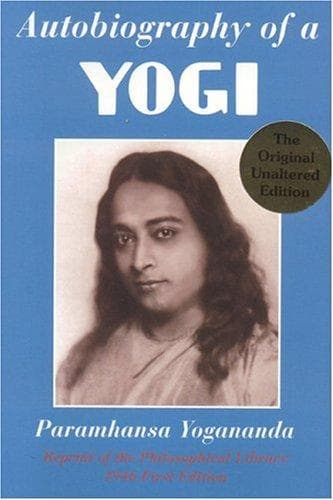
Yogananda, Paramahansa, 1893-1952; Yogis -- India -- Biography
“Let Alexander then terrify with these threats those who wish for
wealth and who dread death, for against us these weapons are both
alike powerless; the Brahmins neither love gold nor fear death. Go
then and tell Alexander this: Dandamis has no need of aught that is
yours, and therefore will not go to you, and if you want anything
from Dandamis, come you to him.”
With close attention Alexander received through Onesikritos the
message from the yogi, and “felt a stronger desire than ever to
see Dandamis who, though old and naked, was the only antagonist
in whom he, the conqueror of many nations, had met more than his
match.”
Alexander invited to Taxila a number of Brahmin ascetics noted for
their skill in answering philosophical questions with pithy wisdom.
An account of the verbal skirmish is given by Plutarch; Alexander
himself framed all the questions.
“Which be the more numerous, the living or the dead?”
“The living, for the dead are not.”
“Which breeds the larger animals, the sea or the land?”
“The land, for the sea is only a part of land.”
“Which is the cleverest of beasts?”
“That one with which man is not yet acquainted.” (Man fears the
unknown.)
“Which existed first, the day or the night?”
“The day was first by one day.” This reply caused Alexander to
betray surprise; the Brahmin added: “Impossible questions require
impossible answers.”
“How best may a man make himself beloved?”
“A man will be beloved if, possessed with great power, he still
does not make himself feared.”
“How may a man become a god?” {FN41-5}
“By doing that which it is impossible for a man to do.”
“Which is stronger, life or death?”
“Life, because it bears so many evils.”
Alexander succeeded in taking out of India, as his teacher, a true
yogi. This man was Swami Sphines, called “Kalanos” by the Greeks
because the saint, a devotee of God in the form of Kali, greeted
everyone by pronouncing Her auspicious name.
Kalanos accompanied Alexander to Persia. On a stated day, at Susa
in Persia, Kalanos gave up his aged body by entering a funeral
pyre in view of the whole Macedonian army. The historians record
the astonishment of the soldiers who observed that the yogi had no
fear of pain or death, and who never once moved from his position
as he was consumed in the flames. Before leaving for his cremation,
Kalanos had embraced all his close companions, but refrained from
bidding farewell to Alexander, to whom the Hindu sage had merely
remarked:
“I shall see you shortly in Babylon.”
Alexander left Persia, and died a year later in Babylon. His Indian
guru’s words had been his way of saying he would be present with
Alexander in life and death.
Public-domain text, read in full here on John Shaqi.
Reviews
Reviews
No reviews yet
Be the first to share your thoughts on this work.
Elsewhere in the archive
Join the Discussion
Join the discussion
Sign in to leave a comment or review.
Sign InorCreate an account