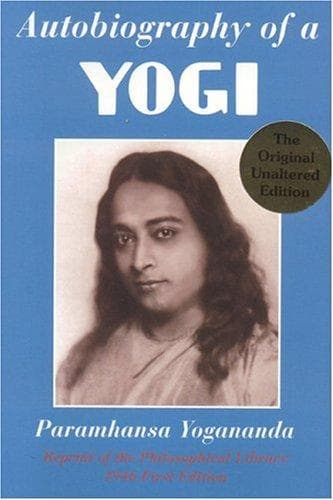
Yogananda, Paramahansa, 1893-1952; Yogis -- India -- Biography
The Greek historians have left us many vivid and inspiring pictures
of Indian society. Hindu law, Arrian tells us, protects the people
and “ordains that no one among them shall, under any circumstances,
be a slave but that, enjoying freedom themselves, they shall respect
the equal right to it which all possess. For those, they thought,
who have learned neither to domineer over nor cringe to others will
attain the life best adapted for all vicissitudes of lot.” {FN41-6}
“The Indians,” runs another text, “neither put out money at usury,
nor know how to borrow. It is contrary to established usage for an
Indian either to do or suffer a wrong, and therefore they neither
make contracts nor require securities.” Healing, we are told, was
by simple and natural means. “Cures are effected rather by regulating
diet than by the use of medicines. The remedies most esteemed are
ointments and plasters. All others are considered to be in great
measure pernicious.” Engagement in war was restricted to the KSHATRIYAS
or warrior caste. “Nor would an enemy coming upon a husbandman at
his work on his land, do him any harm, for men of this class being
regarded as public benefactors, are protected from all injury. The
land thus remaining unravaged and producing heavy crops, supplies
the inhabitants with the requisites to make life enjoyable.” {FN41-7}
The Emperor Chandragupta who in 305 B.C. had defeated Alexander’s
general, Seleucus, decided seven years later to hand over the
reins of India’s government to his son. Traveling to South India,
Chandragupta spent the last twelve years of his life as a penniless
ascetic, seeking self-realization in a rocky cave at Sravanabelagola,
now honored as a Mysore shrine. Near-by stands the world’s largest
statue, carved out of an immense boulder by the Jains in A.D. 983
to honor the saint Comateswara.
The ubiquitous religious shrines of Mysore are a constant reminder
of the many great saints of South India. One of these masters,
Thayumanavar, has left us the following challenging poem:
You can control a mad elephant;
You can shut the mouth of the bear and the tiger;
You can ride a lion;
You can play with the cobra;
By alchemy you can eke out your livelihood;
You can wander through the universe incognito;
You can make vassals of the gods;
You can be ever youthful;
You can walk on water and live in fire;
But control of the mind is better and more difficult.
In the beautiful and fertile State of Travancore in the extreme
south of India, where traffic is conveyed over rivers and canals,
the Maharaja assumes every year a hereditary obligation to expiate
the sin incurred by wars and the annexation in the distant past
of several petty states to Travancore. For fifty-six days annually
the Maharaja visits the temple thrice daily to hear Vedic hymns
and recitations; the expiation ceremony ends with the LAKSHADIPAM
or illumination of the temple by a hundred thousand lights.
Public-domain text, read in full here on John Shaqi.
Reviews
Reviews
No reviews yet
Be the first to share your thoughts on this work.
Elsewhere in the archive
Join the Discussion
Join the discussion
Sign in to leave a comment or review.
Sign InorCreate an account