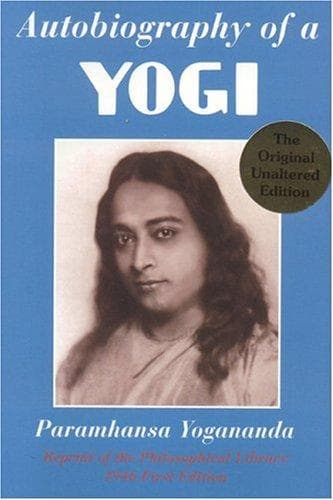
Yogananda, Paramahansa, 1893-1952; Yogis -- India -- Biography
His interpretations of the BHAGAVAD GITA and other scriptures testify
to the depth of Sri Yukteswarji’s command of the philosophy, both
Eastern and Western, and remain as an eye-opener for the unity
between Orient and Occident. As he believed in the unity of all
religious faiths, Sri Yukteswar Maharaj established SADHU SABHA
(Society of Saints) with the cooperation of leaders of various
sects and faiths, for the inculcation of a scientific spirit in
religion. At the time of his demise he nominated Swami Yogananda
his successor as the president of SADHU SABHA.
India is really poorer today by the passing of such a great man. May
all fortunate enough to have come near him inculcate in themselves
the true spirit of India’s culture and SADHANA which was personified
in him.
I returned to Calcutta. Not trusting myself as yet to go to the
Serampore hermitage with its sacred memories, I summoned Prafulla,
Sri Yukteswar’s little disciple in Serampore, and made arrangements
for him to enter the Ranchi school.
“The morning you left for the Allahabad MELA,” Prafulla told me,
“Master dropped heavily on the davenport.
“‘Yogananda is gone!’ he cried. ‘Yogananda is gone!’ He added
cryptically, ‘I shall have to tell him some other way.’ He sat then
for hours in silence.”
My days were filled with lectures, classes, interviews, and reunions
with old friends. Beneath a hollow smile and a life of ceaseless
activity, a stream of black brooding polluted the inner river of
bliss which for so many years had meandered under the sands of all
my perceptions.
“Where has that divine sage gone?” I cried silently from the depths
of a tormented spirit.
No answer came.
“It is best that Master has completed his union with the Cosmic
Beloved,” my mind assured me. “He is eternally glowing in the
dominion of deathlessness.”
“Never again may you see him in the old Serampore mansion,” my
heart lamented. “No longer may you bring your friends to meet him,
or proudly say: ‘Behold, there sits India’s JNANAVATAR!’”
Mr. Wright made arrangements for our party to sail from Bombay
for the West in early June. After a fortnight in May of farewell
banquets and speeches at Calcutta, Miss Bletch, Mr. Wright and myself
left in the Ford for Bombay. On our arrival, the ship authorities
asked us to cancel our passage, as no room could be found for the
Ford, which we would need again in Europe.
“Never mind,” I said gloomily to Mr. Wright. “I want to return once
more to Puri.” I silently added, “Let my tears once again water
the grave of my guru.”
{FN42-1} Literally, PARAM, highest; HANSA, swan. The HANSA is
represented in scriptural lore as the vehicle of Brahma, Supreme
Spirit; as the symbol of discrimination, the white HANSA swan is
thought of as able to separate the true SOMA nectar from a mixture
of milk and water. HAM-SA (pronounced HONG-SAU) are two sacred
Sanskrit chant words possessing a vibratory connection with the
incoming and outgoing breath. AHAM-SA is literally “I am He.”
Public-domain text, read in full here on John Shaqi.
Reviews
Reviews
No reviews yet
Be the first to share your thoughts on this work.
Elsewhere in the archive
Join the Discussion
Join the discussion
Sign in to leave a comment or review.
Sign InorCreate an account