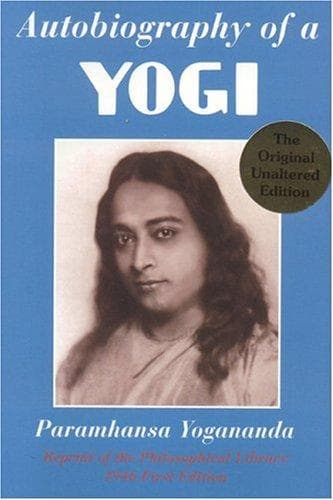
Yogananda, Paramahansa, 1893-1952; Yogis -- India -- Biography
{FN42-2} They have generally evaded the difficulty by addressing
me as SIR.
{FN42-3} At the Puri ashram, Swami Sebananda is still conducting
a small, flourishing yoga school for boys, and meditation groups
for adults. Meetings of saints and pundits convene there periodically.
{FN42-4} A section of Calcutta.
{FN42-5} APHORISMS: II:9.
{FN42-6} Religious MELAS are mentioned in the ancient MAHABHARATA.
The Chinese traveler Hieuen Tsiang has left an account of a vast
KUMBHA MELA held in A.D. 644 at Allahabad. The largest MELA is held
every twelfth year; the next largest (ARDHA or half) KUMBHA occurs
every sixth year. Smaller MELAS convene every third year, attracting
about a million devotees. The four sacred MELA cities are Allahabad,
Hardwar, Nasik, and Ujjain.
Early Chinese travelers have left us many striking pictures of
Indian society. The Chinese priest, Fa-Hsien, wrote an account of
his eleven years in India during the reign of Chandragupta II (early
4th century). The Chinese author relates: “Throughout the country
no one kills any living thing, nor drinks wine. . . . They do not
keep pigs or fowl; there are no dealings in cattle, no butchers’
shops or distilleries. Rooms with beds and mattresses, food and
clothes, are provided for resident and traveling priests without fail,
and this is the same in all places. The priests occupy themselves
with benevolent ministrations and with chanting liturgies; or they
sit in meditation.” Fa-Hsien tells us the Indian people were happy
and honest; capital punishment was unknown.
{FN42-7} I was not present at the deaths of my mother, elder
brother Ananta, eldest sister Roma, Master, Father, or of several
close disciples.
(Father passed on at Calcutta in 1942, at the age of eighty-nine.)
{FN42-8} The hundreds of thousands of Indian sadhus are controlled
by an executive committee of seven leaders, representing seven
large sections of India. The present MAHAMANDALESWAR or president
is Joyendra Puri. This saintly man is extremely reserved, often
confining his speech to three words-Truth, Love, and Work. A
sufficient conversation!
{FN42-9} There are many methods, it appears, for outwitting a
tiger. An Australian explorer, Francis Birtles, has recounted that
he found the Indian jungles “varied, beautiful, and safe.” His
safety charm was flypaper. “Every night I spread a quantity of
sheets around my camp and was never disturbed,” he explained. “The
reason is psychological. The tiger is an animal of great conscious
dignity. He prowls around and challenges man until he comes to the
flypaper; he then slinks away. No dignified tiger would dare face
a human being after squatting down upon a sticky flypaper!”
{FN42-10} After I returned to America I took off sixty-five pounds.
{FN42-11} Sri Yukteswar passed at this hour-7:00 P.M., March 9,
1936.
Public-domain text, read in full here on John Shaqi.
Reviews
Reviews
No reviews yet
Be the first to share your thoughts on this work.
Elsewhere in the archive
Join the Discussion
Join the discussion
Sign in to leave a comment or review.
Sign InorCreate an account