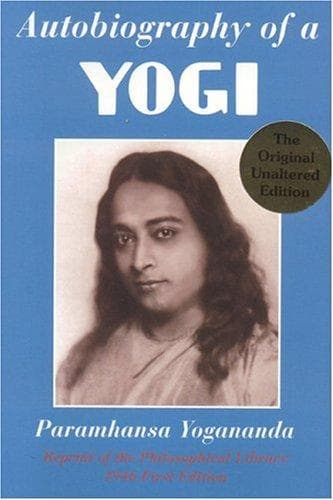
Yogananda, Paramahansa, 1893-1952; Yogis -- India -- Biography
The Mahatma ate CHAPATIS, boiled beets, some raw vegetables, and
oranges. On the side of his plate was a large lump of very bitter
NEEM leaves, a notable blood cleanser. With his spoon he separated
a portion and placed it on my dish. I bolted it down with water,
remembering childhood days when Mother had forced me to swallow the
disagreeable dose. Gandhi, however, bit by bit was eating the NEEM
paste with as much relish as if it had been a delicious sweetmeat.
In this trifling incident I noted the Mahatma’s ability to detach
his mind from the senses at will. I recalled the famous appendectomy
performed on him some years ago. Refusing anesthetics, the saint
had chatted cheerfully with his disciples throughout the operation,
his infectious smile revealing his unawareness of pain.
The afternoon brought an opportunity for a chat with Gandhi’s noted
disciple, daughter of an English admiral, Miss Madeleine Slade, now
called Mirabai. {FN44-3} Her strong, calm face lit with enthusiasm
as she told me, in flawless Hindi, of her daily activities.
“Rural reconstruction work is rewarding! A group of us go every
morning at five o’clock to serve the near-by villagers and teach
them simple hygiene. We make it a point to clean their latrines and
their mud-thatched huts. The villagers are illiterate; they cannot
be educated except by example!” She laughed gaily.
I looked in admiration at this highborn Englishwoman whose true
Christian humility enables her to do the scavengering work usually
performed only by “untouchables.”
“I came to India in 1925,” she told me. “In this land I feel that
I have ‘come back home.’ Now I would never be willing to return to
my old life and old interests.”
We discussed America for awhile. “I am always pleased and amazed,”
she said, “to see the deep interest in spiritual subjects exhibited
by the many Americans who visit India.” {FN44-4}
Mirabai’s hands were soon busy at the CHARKA (spinning wheel),
omnipresent in all the ashram rooms and, indeed, due to the Mahatma,
omnipresent throughout rural India.
Gandhi has sound economic and cultural reasons for encouraging the
revival of cottage industries, but he does not counsel a fanatical
repudiation of all modern progress. Machinery, trains, automobiles,
the telegraph have played important parts in his own colossal life!
Fifty years of public service, in prison and out, wrestling daily
with practical details and harsh realities in the political world,
have only increased his balance, open-mindedness, sanity, and
humorous appreciation of the quaint human spectacle.
Public-domain text, read in full here on John Shaqi.
Reviews
Reviews
No reviews yet
Be the first to share your thoughts on this work.
Elsewhere in the archive
Join the Discussion
Join the discussion
Sign in to leave a comment or review.
Sign InorCreate an account