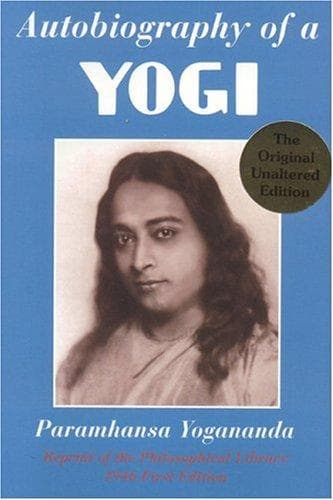
Yogananda, Paramahansa, 1893-1952; Yogis -- India -- Biography
“The unique throb of life in all creation could seem only poetic
imagery before your advent, Professor! A saint I once knew would
never pluck flowers. ‘Shall I rob the rosebush of its pride in
beauty? Shall I cruelly affront its dignity by my rude divestment?’
His sympathetic words are verified literally through your discoveries!”
“The poet is intimate with truth, while the scientist approaches
awkwardly. Come someday to my laboratory and see the unequivocable
testimony of the crescograph.”
Gratefully I accepted the invitation, and took my departure. I
heard later that the botanist had left Presidency College, and was
planning a research center in Calcutta.
When the Bose Institute was opened, I attended the dedicatory
services. Enthusiastic hundreds strolled over the premises. I was
charmed with the artistry and spiritual symbolism of the new home
of science. Its front gate, I noted, was a centuried relic from
a distant shrine. Behind the lotus {FN8-3} fountain, a sculptured
female figure with a torch conveyed the Indian respect for woman
as the immortal light-bearer. The garden held a small temple
consecrated to the Noumenon beyond phenomena. Thought of the divine
incorporeity was suggested by absence of any altar-image.
Bose’s speech on this great occasion might have issued from the
lips of one of the inspired ancient RISHIS.
“I dedicate today this Institute as not merely a laboratory but
a temple.” His reverent solemnity stole like an unseen cloak over
the crowded auditorium. “In the pursuit of my investigations I was
unconsciously led into the border region of physics and physiology.
To my amazement, I found boundary lines vanishing, and points
of contact emerging, between the realms of the living and the
non-living. Inorganic matter was perceived as anything but inert;
it was athrill under the action of multitudinous forces.
“A universal reaction seemed to bring metal, plant and animal under
a common law. They all exhibited essentially the same phenomena
of fatigue and depression, with possibilities of recovery and of
exaltation, as well as the permanent irresponsiveness associated
with death. Filled with awe at this stupendous generalization, it
was with great hope that I announced my results before the Royal
Society—results demonstrated by experiments. But the physiologists
present advised me to confine myself to physical investigations, in
which my success had been assured, rather than encroach on their
preserves. I had unwittingly strayed into the domain of an unfamiliar
caste system and so offended its etiquette.
Public-domain text, read in full here on John Shaqi.
Reviews
Reviews
No reviews yet
Be the first to share your thoughts on this work.
Join the Discussion
Join the discussion
Sign in to leave a comment or review.
Sign InorCreate an account