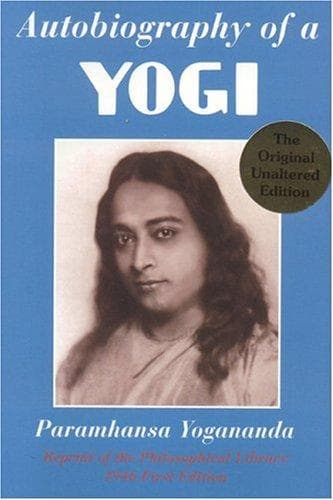
Yogananda, Paramahansa, 1893-1952; Yogis -- India -- Biography
O Hermit, call thou in the authentic words
Of that old hymn called SAMA; “Rise! Awake!”
Call to the man who boasts his SHASTRIC lore
From vain pedantic wranglings profitless,
Call to that foolish braggart to come forth
Out on the face of nature, this broad earth,
Send forth this call unto thy scholar band;
Together round thy sacrifice of fire
Let them all gather. So may our India,
Our ancient land unto herself return
O once again return to steadfast work,
To duty and devotion, to her trance
Of earnest meditation; let her sit
Once more unruffled, greedless, strifeless, pure,
O once again upon her lofty seat
And platform, teacher of all lands.
{FN8-1} “All science is transcendental or else passes away. Botany
is now acquiring the right theory-the avatars of Brahma will
presently be the textbooks of natural history.”-EMERSON.
{FN8-2} From the Latin root, CRESCERE, to increase. For his
crescograph and other inventions, Bose was knighted in 1917.
{FN8-3} The lotus flower is an ancient divine symbol in India; its
unfolding petals suggest the expansion of the soul; the growth of
its pure beauty from the mud of its origin holds a benign spiritual
promise.
{FN8-4} “At present, only the sheerest accident brings India into
the purview of the American college student. Eight universities
(Harvard, Yale, Columbia, Princeton, Johns Hopkins, Pennsylvania,
Chicago, and California) have chairs of Indology or Sanskrit,
but India is virtually unrepresented in departments of history,
philosophy, fine arts, political science, sociology, or any of
the other departments of intellectual experience in which, as we
have seen, India has made great contributions. . . . We believe,
consequently, that no department of study, particularly in the
humanities, in any major university can be fully equipped without
a properly trained specialist in the Indic phases of its discipline.
We believe, too, that every college which aims to prepare its
graduates for intelligent work in the world which is to be theirs
to live in, must have on its staff a scholar competent in the
civilization of India.”-Extracts from an article by Professor W.
Norman Brown of the University of Pennsylvania which appeared in
the May, 1939, issue of the BULLETIN of the American Council of
Learned Societies, 907 15th St., Washington, D. C., 25 cents copy.
This issue (#28) contains over 100 pages of a “Basic Bibliography
for Indic Studies.”
{FN8-5} The atomic structure of matter was well-known to the ancient
Hindus. One of the six systems of Indian philosophy is VAISESIKA,
from the Sanskrit root VISESAS, “atomic individuality.” One of the
foremost VAISESIKA expounders was Aulukya, also called Kanada, “the
atom-eater,” born about 2800 years ago.
Public-domain text, read in full here on John Shaqi.
Reviews
Reviews
No reviews yet
Be the first to share your thoughts on this work.
Join the Discussion
Join the discussion
Sign in to leave a comment or review.
Sign InorCreate an account