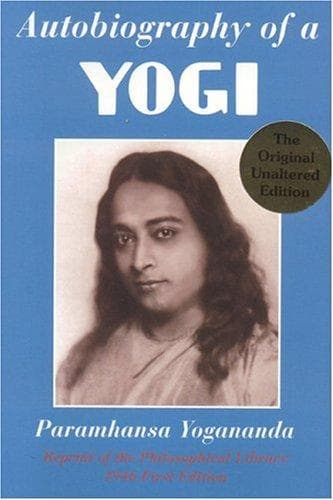
Yogananda, Paramahansa, 1893-1952; Yogis -- India -- Biography
No diminution came with the years. Inventing an intricate instrument,
the “Resonant Cardiograph,” Bose then pursued extensive researches
on innumerable Indian plants. An enormous unsuspected pharmacopoeia
of useful drugs was revealed. The cardiograph is constructed with
an unerring accuracy by which a one-hundredth part of a second
is indicated on a graph. Resonant records measure infinitesimal
pulsations in plant, animal and human structure. The great botanist
predicted that use of his cardiograph will lead to vivisection on
plants instead of animals.
“Side by side recordings of the effects of a medicine given
simultaneously to a plant and an animal have shown astounding
unanimity in result,” he pointed out. “Everything in man has been
foreshadowed in the plant. Experimentation on vegetation will
contribute to lessening of human suffering.”
Years later Bose’s pioneer plant findings were substantiated by other
scientists. Work done in 1938 at Columbia University was reported
by THE NEW YORK TIMES as follows:
It has been determined within the past few years that when the
nerves transmit messages between the brain and other parts of the
body, tiny electrical impulses are being generated. These impulses
have been measured by delicate galvanometers and magnified millions
of times by modern amplifying apparatus. Until now no satisfactory
method had been found to study the passages of the impulses along
the nerve fibers in living animals or man because of the great
speed with which these impulses travel.
Drs. K. S. Cole and H. J. Curtis reported having discovered that the
long single cells of the fresh-water plant nitella, used frequently
in goldfish bowls, are virtually identical with those of single
nerve fibers. Furthermore, they found that nitella fibers, on being
excited, propagate electrical waves that are similar in every way,
except velocity, to those of the nerve fibers in animals and man.
The electrical nerve impulses in the plant were found to be much
slower than those in animals. This discovery was therefore seized
upon by the Columbia workers as a means for taking slow motion
pictures of the passage of the electrical impulses in nerves.
The nitella plant thus may become a sort of Rosetta stone for
deciphering the closely guarded secrets close to the very borderland
of mind and matter.
The poet Rabindranath Tagore was a stalwart friend of India’s
idealistic scientist. To him, the sweet Bengali singer addressed
the following lines: {FN8-6}
Public-domain text, read in full here on John Shaqi.
Reviews
Reviews
No reviews yet
Be the first to share your thoughts on this work.
Join the Discussion
Join the discussion
Sign in to leave a comment or review.
Sign InorCreate an account