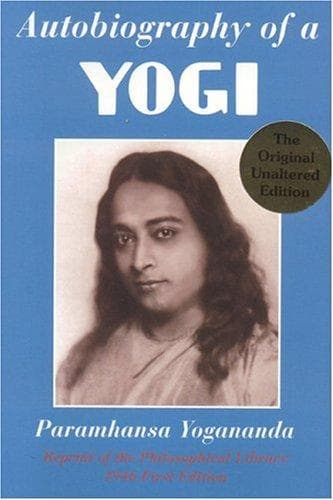
Yogananda, Paramahansa, 1893-1952; Yogis -- India -- Biography
Sri Yukteswar’s mother lived in the Rana Mahal district of Benares
where I had first visited my guru. Gracious and kindly, she was
yet a woman of very decided opinions. I stood on her balcony one
day and watched mother and son talking together. In his quiet,
sensible way, Master was trying to convince her about something.
He was apparently unsuccessful, for she shook her head with great
vigor.
“Nay, nay, my son, go away now! Your wise words are not for me! I
am not your disciple!”
Sri Yukteswar backed away without further argument, like a scolded
child. I was touched at his great respect for his mother even in
her unreasonable moods. She saw him only as her little boy, not as a
sage. There was a charm about the trifling incident; it supplied
a sidelight on my guru’s unusual nature, inwardly humble and
outwardly unbendable.
The monastic regulations do not allow a swami to retain connection
with worldly ties after their formal severance. He cannot perform
the ceremonial family rites which are obligatory on the householder.
Yet Shankara, the ancient founder of the Swami Order, disregarded
the injunctions. At the death of his beloved mother, he cremated her
body with heavenly fire which he caused to spurt from his upraised
hand.
Sri Yukteswar also ignored the restrictions, in a fashion less
spectacular. When his mother passed on, he arranged the crematory
services by the holy Ganges in Benares, and fed many Brahmins in
conformance with age-old custom.
The SHASTRIC prohibitions were intended to help swamis overcome
narrow identifications. Shankara and Sri Yukteswar had wholly merged
their beings in the Impersonal Spirit; they needed no rescue by
rule. Sometimes, too, a master purposely ignores a canon in order
to uphold its principle as superior to and independent of form. Thus
Jesus plucked ears of corn on the day of rest. To the inevitable
critics he said: “The sabbath was made for man, and not man for
the sabbath.” {FN12-20}
Outside of the scriptures, seldom was a book honored by Sri
Yukteswar’s perusal. Yet he was invariably acquainted with the
latest scientific discoveries and other advancements of knowledge.
A brilliant conversationalist, he enjoyed an exchange of views on
countless topics with his guests. My guru’s ready wit and rollicking
laugh enlivened every discussion. Often grave, Master was never
gloomy. “To seek the Lord, one need not disfigure his face,” he
would remark. “Remember that finding God will mean the funeral of
all sorrows.”
Among the philosophers, professors, lawyers and scientists who came
to the hermitage, a number arrived for their first visit with the
expectation of meeting an orthodox religionist. A supercilious
smile or a glance of amused tolerance occasionally betrayed that
the newcomers anticipated nothing more than a few pious platitudes.
Yet their reluctant departure would bring an expressed conviction
that Sri Yukteswar had shown precise insight into their specialized
fields.
Public-domain text, read in full here on John Shaqi.
Reviews
Reviews
No reviews yet
Be the first to share your thoughts on this work.
Elsewhere in the archive
Join the Discussion
Join the discussion
Sign in to leave a comment or review.
Sign InorCreate an account