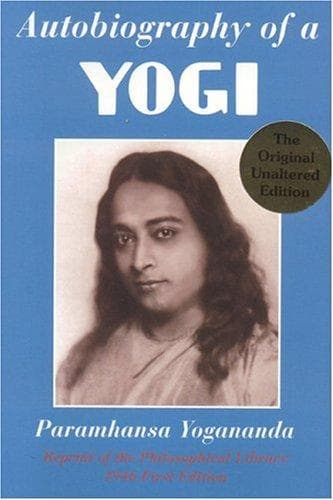
Yogananda, Paramahansa, 1893-1952; Yogis -- India -- Biography
“This is my first encounter with a heavenly magistrate,” he said.
Later he made a formal request, couched in the legal terms which
were evidently part and parcel of his being, to be accepted as a
“probationary” disciple.
My guru personally attended to the details connected with the
management of his property. Unscrupulous persons on various occasions
attempted to secure possession of Master’s ancestral land. With
determination and even by instigating lawsuits, Sri Yukteswar
outwitted every opponent. He underwent these painful experiences from
a desire never to be a begging guru, or a burden on his disciples.
His financial independence was one reason why my alarmingly
outspoken Master was innocent of the cunnings of diplomacy. Unlike
those teachers who have to flatter their supporters, my guru was
impervious to the influences, open or subtle, of others’ wealth.
Never did I hear him ask or even hint for money for any purpose.
His hermitage training was given free and freely to all disciples.
An insolent court deputy arrived one day at the Serampore ashram
to serve Sri Yukteswar with a legal summons. A disciple named Kanai
and myself were also present. The officer’s attitude toward Master
was offensive.
“It will do you good to leave the shadows of your hermitage and breathe
the honest air of a courtroom.” The deputy grinned contemptuously.
I could not contain myself.
“Another word of your impudence and you will be on the floor!” I
advanced threateningly.
“You wretch!” Kanai’s shout was simultaneous with my own. “Dare
you bring your blasphemies into this sacred ashram?”
But Master stood protectingly in front of his abuser. “Don’t get
excited over nothing. This man is only doing his rightful duty.”
The officer, dazed at his varying reception, respectfully offered
a word of apology and sped away.
Amazing it was to find that a master with such a fiery will could
be so calm within. He fitted the Vedic definition of a man of God:
“Softer than the flower, where kindness is concerned; stronger than
the thunder, where principles are at stake.”
There are always those in this world who, in Browning’s words,
“endure no light, being themselves obscure.” An outsider occasionally
berated Sri Yukteswar for an imaginary grievance. My imperturbable
guru listened politely, analyzing himself to see if any shred of
truth lay within the denunciation. These scenes would bring to my
mind one of Master’s inimitable observations: “Some people try to
be tall by cutting off the heads of others!”
The unfailing composure of a saint is impressive beyond any sermon.
“He that is slow to anger is better than the mighty; and he that
ruleth his spirit than he that taketh a city.” {FN12-23}
I often reflected that my majestic Master could easily have been
an emperor or world-shaking warrior had his mind been centered on
fame or worldly achievement. He had chosen instead to storm those
inner citadels of wrath and egotism whose fall is the height of a
man.
Public-domain text, read in full here on John Shaqi.
Reviews
Reviews
No reviews yet
Be the first to share your thoughts on this work.
Elsewhere in the archive
Join the Discussion
Join the discussion
Sign in to leave a comment or review.
Sign InorCreate an account