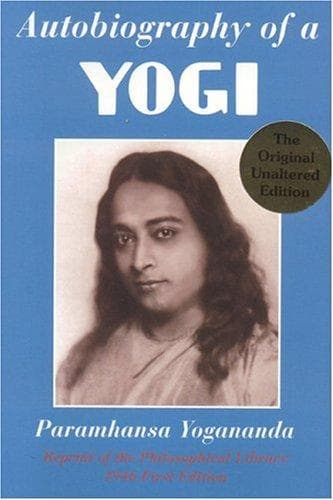
Yogananda, Paramahansa, 1893-1952; Yogis -- India -- Biography
{FN12-1} “Worship of Durga.” This is the chief festival of the
Bengali year and lasts for nine days around the end of September.
Immediately following is the ten-day festival of DASHAHARA (“the One
who removes ten sins”-three of body, three of mind, four of speech).
Both PUJAS are sacred to Durga, literally “the Inaccessible,” an
aspect of Divine Mother, Shakti, the female creative force personified.
{FN12-2} Sri Yukteswar was born on May 10, 1855.
{FN12-3} YUKTESWAR means “united to God.” GIRI is a classificatory
distinction of one of the ten ancient Swami branches. SRI means
“holy”; it is not a name but a title of respect.
{FN12-4} Literally, “to direct together.” SAMADHI is a superconscious
state of ecstasy in which the yogi perceives the identity of soul
and Spirit.
{FN12-5} Snoring, according to physiologists, is an indication of
utter relaxation (to the oblivious practitioner, solely).
{FN12-6} DHAL is a thick soup made from split peas or other pulses.
CHANNA is a cheese of fresh curdled milk, cut into squares and
curried with potatoes.
{FN12-7} The omnipresent powers of a yogi, whereby he sees, hears,
tastes, smells, and feels his oneness in creation without the use
of sensory organs, have been described as follows in the TAITTIRIYA
ARANYAKA: “The blind man pierced the pearl; the fingerless put a
thread into it; the neckless wore it; and the tongueless praised
it.”
{FN12-8} The cobra swiftly strikes at any moving object within its
range. Complete immobility is usually one’s sole hope of safety.
{FN12-9} Lahiri Mahasaya actually said “Priya” (first or given
name), not “Yukteswar” (monastic name, not received by my guru
during Lahiri Mahasaya’s lifetime). (See page 109.) “Yukteswar” is
substituted here, and in a few other places in this book, in order
to avoid the confusion, to reader, of two names.
{FN12-10} “Therefore I say unto you, What things soever ye desire,
when ye pray, believe that ye receive them, and ye shall have
them.”-MARK 11:24. Masters who possess the Divine Vision are fully
able to transfer their realizations to advanced disciples, as Lahiri
Mahasaya did for Sri Yukteswar on this occasion.
{FN12-11} “And one of them smote the servant of the high priest,
and cut off his right ear. And Jesus answered and said, Suffer ye
thus far. And he touched his ear and healed him.”-LUKE 22:50-51.
{FN12-12} “Give not that which is holy unto the dogs, neither cast
ye your pearls before swine, lest they trample them under their
feet, and turn again and rend you.”-MATTHEW 7:6.
{FN12-13} Disciples; from Sanskrit verb root, “to serve.”
{FN12-14} He was once ill in Kashmir, when I was absent from him.
(See chapter 23.)
Public-domain text, read in full here on John Shaqi.
Reviews
Reviews
No reviews yet
Be the first to share your thoughts on this work.
Elsewhere in the archive
Join the Discussion
Join the discussion
Sign in to leave a comment or review.
Sign InorCreate an account