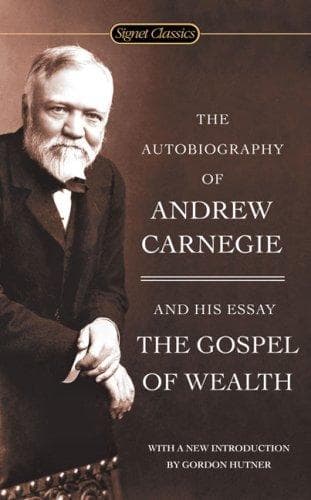
Carnegie, Andrew, 1835-1919; Industrialists -- United States -- Biography; Philanthropists -- United States -- Biography
I became interested in the Peace Society of Great Britain upon one of
my early visits and attended many of its meetings, and in later days I
was especially drawn to the Parliamentary Union established by Mr.
Cremer, the famous working-man's representative in Parliament. Few men
living can be compared to Mr. Cremer. When he received the Nobel Prize
of L8000 as the one who had done the most that year for peace, he
promptly gave all but L1000, needed for pressing wants, to the
Arbitration Committee. It was a noble sacrifice. What is money but
dross to the true hero! Mr. Cremer is paid a few dollars a week by his
trade to enable him to exist in London as their member of Parliament,
and here was fortune thrown in his lap only to be devoted by him to
the cause of peace. This is the heroic in its finest form.
I had the great pleasure of presenting the Committee to President
Cleveland at Washington in 1887, who received the members cordially
and assured them of his hearty cooeperation. From that day the
abolition of war grew in importance with me until it finally
overshadowed all other issues. The surprising action of the first
Hague Conference gave me intense joy. Called primarily to consider
disarmament (which proved a dream), it created the commanding reality
of a permanent tribunal to settle international disputes. I saw in
this the greatest step toward peace that humanity had ever taken, and
taken as if by inspiration, without much previous discussion. No
wonder the sublime idea captivated the conference.
If Mr. Holls, whose death I so deeply deplored, were alive to-day and
a delegate to the forthcoming second Conference with his chief, Andrew
D. White, I feel that these two might possibly bring about the
creation of the needed International Court for the abolition of war.
He it was who started from The Hague at night for Germany, upon
request of his chief, and saw the German Minister of Foreign Affairs,
and the Emperor and finally prevailed upon them to approve of the High
Court, and not to withdraw their delegates as threatened--a service
for which Mr. Holls deserves to be enrolled among the greatest
servants of mankind. Alas, death came to him while still in his prime.
The day that International Court is established will become one of the
most memorable days in the world's history.[57] It will ring the knell
of man killing man--the deepest and blackest of crimes. It should be
celebrated in every land as I believe it will be some day, and that
time, perchance, not so remote as expected. In that era not a few of
those hitherto extolled as heroes will have found oblivion because
they failed to promote peace and good-will instead of war.
Public-domain text, read in full here on John Shaqi.
Reviews
Reviews
No reviews yet
Be the first to share your thoughts on this work.
Elsewhere in the archive
Join the Discussion
Join the discussion
Sign in to leave a comment or review.
Sign InorCreate an account