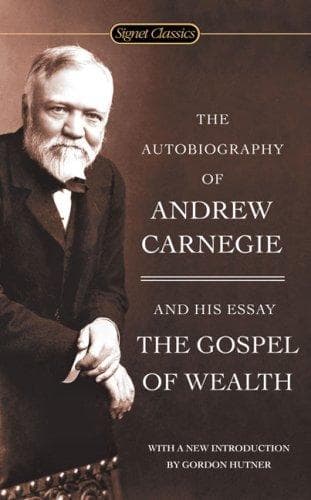
Carnegie, Andrew, 1835-1919; Industrialists -- United States -- Biography; Philanthropists -- United States -- Biography
[Footnote 57: "I submit that the only measure required to-day for the
maintenance of world peace is an agreement between three or four of
the leading Civilized Powers (and as many more as desire to join--the
more the better) pledged to cooeperate against disturbers of world
peace, should such arise." (Andrew Carnegie, in address at unveiling
of a bust of William Randall Cremer at the Peace Palace of The Hague,
August 29, 1913.)]
When Andrew D. White and Mr. Holls, upon their return from The Hague,
suggested that I offer the funds needed for a Temple of Peace at The
Hague, I informed them that I never could be so presumptuous; that if
the Government of the Netherlands informed me of its desire to have
such a temple and hoped I would furnish the means, the request would
be favorably considered. They demurred, saying this could hardly be
expected from any Government. Then I said I could never act in the
matter.
Finally the Dutch Government did make application, through its
Minister, Baron Gevers in Washington, and I rejoiced. Still, in
writing him, I was careful to say that the drafts of his Government
would be duly honored. I did not send the money. The Government drew
upon me for it, and the draft for a million and a half is kept as a
memento. It seems to me almost too much that any individual should be
permitted to perform so noble a duty as that of providing means for
this Temple of Peace--the most holy building in the world because it
has the holiest end in view. I do not even except St. Peter's, or any
building erected to the glory of God, whom, as Luther says, "we cannot
serve or aid; He needs no help from us." This temple is to bring
peace, which is so greatly needed among His erring creatures. "The
highest worship of God is service to man." At least, I feel so with
Luther and Franklin.
When in 1907 friends came and asked me to accept the presidency of the
Peace Society of New York, which they had determined to organize, I
declined, alleging that I was kept very busy with many affairs, which
was true; but my conscience troubled me afterwards for declining. If I
were not willing to sacrifice myself for the cause of peace what
should I sacrifice for? What was I good for? Fortunately, in a few
days, the Reverend Lyman Abbott, the Reverend Mr. Lynch, and some
other notable laborers for good causes called to urge my
reconsideration. I divined their errand and frankly told them they
need not speak. My conscience had been tormenting me for declining and
I would accept the presidency and do my duty. After that came the
great national gathering (the following April) when for the first time
in the history of Peace Society meetings, there attended delegates
from thirty-five of the states of the Union, besides many foreigners
of distinction.[58]
Public-domain text, read in full here on John Shaqi.
Reviews
Reviews
No reviews yet
Be the first to share your thoughts on this work.
Elsewhere in the archive
Join the Discussion
Join the discussion
Sign in to leave a comment or review.
Sign InorCreate an account