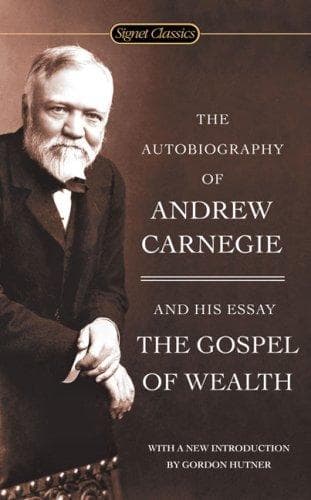
Carnegie, Andrew, 1835-1919; Industrialists -- United States -- Biography; Philanthropists -- United States -- Biography
Pittsburgh's leading citizens are spending freely upon artistic
things. This center of manufacturing has had its permanent orchestra
for some years--Boston and Chicago being the only other cities in
America that can boast of one. A naturalist club and a school of
painting have sprung up. The success of Library, Art Gallery, Museum,
and Music Hall--a noble quartet in an immense building--is one of the
chief satisfactions of my life. This is my monument, because here I
lived my early life and made my start, and I am to-day in heart a
devoted son of dear old smoky Pittsburgh.
Herbert Spencer heard, while with us in Pittsburgh, some account of
the rejection of my first offer of a library to Pittsburgh. When the
second offer was made, he wrote me that he did not understand how I
could renew it; he never could have done so; they did not deserve it.
I wrote the philosopher that if I had made the first offer to
Pittsburgh that I might receive her thanks and gratitude, I deserved
the personal arrows shot at me and the accusations made that only my
own glorification and a monument to my memory were sought. I should
then probably have felt as he did. But, as it was the good of the
people of Pittsburgh I had in view, among whom I had made my fortune,
the unfounded suspicions of some natures only quickened my desire to
work their good by planting in their midst a potent influence for
higher things. This the Institute, thank the kind fates, has done.
Pittsburgh has played her part nobly.
CHAPTER XXVII
WASHINGTON DIPLOMACY
President Harrison had been a soldier and as President was a little
disposed to fight. His attitude gave some of his friends concern. He
was opposed to arbitrating the Behring Sea question when Lord
Salisbury, at the dictation of Canada, had to repudiate the Blaine
agreement for its settlement, and was disposed to proceed to extreme
measures. But calmer counsels prevailed. He was determined also to
uphold the Force Bill against the South.
When the quarrel arose with Chili, there was a time when it seemed
almost impossible to keep the President from taking action which would
have resulted in war. He had great personal provocation because the
Chilian authorities had been most indiscreet in their statements in
regard to his action. I went to Washington to see whether I could not
do something toward reconciling the belligerents, because, having been
a member of the first Pan-American Conference, I had become acquainted
with the representatives from our southern sister-republics and was on
good terms with them.
As luck would have it, I was just entering the Shoreham Hotel when I
saw Senator Henderson of Missouri, who had been my fellow-delegate to
the Conference. He stopped and greeted me, and looking across the
street he said:
"There's the President beckoning to you."
I crossed the street.
"Hello, Carnegie, when did you arrive?"
"Just arrived, Mr. President; I was entering the hotel."
"What are you here for?"
Public-domain text, read in full here on John Shaqi.
Reviews
Reviews
No reviews yet
Be the first to share your thoughts on this work.
Elsewhere in the archive
Join the Discussion
Join the discussion
Sign in to leave a comment or review.
Sign InorCreate an account