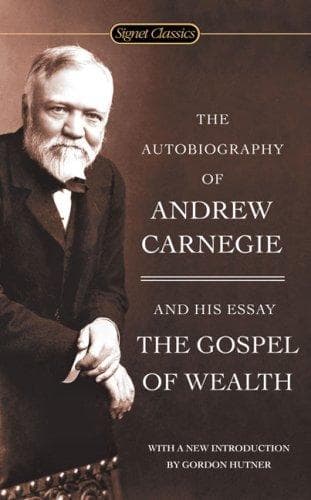
Carnegie, Andrew, 1835-1919; Industrialists -- United States -- Biography; Philanthropists -- United States -- Biography
"To have a talk with you."
"Well, come along and talk as we walk."
The President took my arm and we promenaded the streets of Washington
in the dusk for more than an hour, during which time the discussion
was lively. I told him that he had appointed me a delegate to the
Pan-American Conference, that he had assured the South-American
delegates when they parted that he had given a military review in
their honor to show them, not that we had an army, but rather that we
had none and needed none, that we were the big brother in the family
of republics, and that all disputes, if any arose, would be settled by
peaceful arbitration. I was therefore surprised and grieved to find
that he was now apparently taking a different course, threatening to
resort to war in a paltry dispute with little Chili.
"You're a New Yorker and think of nothing but business and dollars.
That is the way with New Yorkers; they care nothing for the dignity
and honor of the Republic," said his Excellency.
"Mr. President, I am one of the men in the United States who would
profit most by war; it might throw millions into my pockets as the
largest manufacturer of steel."
"Well, that is probably true in your case; I had forgotten."
"Mr. President, if I were going to fight, I would take some one of my
size."
"Well, would you let any nation insult and dishonor you because of its
size?"
"Mr. President, no man can dishonor me except myself. Honor wounds
must be self-inflicted."
"You see our sailors were attacked on shore and two of them killed,
and you would stand that?" he asked.
"Mr. President, I do not think the United States dishonored every time
a row among drunken sailors takes place; besides, these were not
American sailors at all; they were foreigners, as you see by their
names. I would be disposed to cashier the captain of that ship for
allowing the sailors to go on shore when there was rioting in the town
and the public peace had been already disturbed."
The discussion continued until we had finally reached the door of the
White House in the dark. The President told me he had an engagement to
dine out that night, but invited me to dine with him the next evening,
when, as he said, there would be only the family and we could talk.
"I am greatly honored and shall be with you to-morrow evening," I
said. And so we parted.
The next morning I went over to see Mr. Blaine, then Secretary of
State. He rose from his seat and held out both hands.
"Oh, why weren't you dining with us last night? When the President
told Mrs. Blaine that you were in town, she said: 'Just think, Mr.
Carnegie is in town and I had a vacant seat here he could have
occupied.'"
"Well, Mr. Blaine, I think it is rather fortunate that I have not seen
you," I replied; and I then told him what had occurred with the
President.
"Yes," he said, "it really was fortunate. The President might have
thought you and I were in collusion."
Public-domain text, read in full here on John Shaqi.
Reviews
Reviews
No reviews yet
Be the first to share your thoughts on this work.
Elsewhere in the archive
Join the Discussion
Join the discussion
Sign in to leave a comment or review.
Sign InorCreate an account