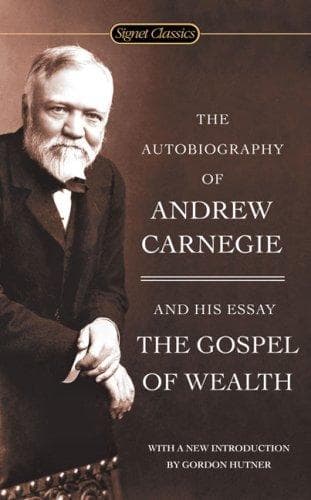
Carnegie, Andrew, 1835-1919; Industrialists -- United States -- Biography; Philanthropists -- United States -- Biography
Senator Elkins, of West Virginia, a bosom friend of Mr. Blaine, and
also a very good friend of the President, happened to come in, and he
said he had seen the President, who told him that he had had a talk
with me upon the Chilian affair last evening and that I had come down
hot upon the subject.
"Well, Mr. President," said Senator Elkins, "it is not probable that
Mr. Carnegie would speak as plainly to you as he would to me. He feels
very keenly, but he would naturally be somewhat reserved in talking to
you."
The President replied: "I didn't see the slightest indication of
reserve, I assure you."
The matter was adjusted, thanks to the peace policy characteristic of
Mr. Blaine. More than once he kept the United States out of foreign
trouble as I personally knew. The reputation that he had of being an
aggressive American really enabled that great man to make concessions
which, made by another, might not have been readily accepted by the
people.
I had a long and friendly talk with the President that evening at
dinner, but he was not looking at all well. I ventured to say to him
he needed a rest. By all means he should get away. He said he had
intended going off on a revenue cutter for a few days, but Judge
Bradley of the Supreme Court had died and he must find a worthy
successor. I said there was one I could not recommend because we had
fished together and were such intimate friends that we could not judge
each other disinterestedly, but he might inquire about him--Mr.
Shiras, of Pittsburgh. He did so and appointed him. Mr. Shiras
received the strong support of the best elements everywhere. Neither
my recommendation, nor that of any one else, would have weighed with
President Harrison one particle in making the appointment if he had
not found Mr. Shiras the very man he wanted.
In the Behring Sea dispute the President was incensed at Lord
Salisbury's repudiation of the stipulations for settling the question
which had been agreed to. The President had determined to reject the
counter-proposition to submit it to arbitration. Mr. Blaine was with
the President in this and naturally indignant that his plan, which
Salisbury had extolled through his Ambassador, had been discarded. I
found both of them in no compromising mood. The President was much the
more excited of the two, however. Talking it over with Mr. Blaine
alone, I explained to him that Salisbury was powerless. Against
Canada's protest he could not force acceptance of the stipulations to
which he had hastily agreed. There was another element. He had a
dispute with Newfoundland on hand, which the latter was insisting must
be settled to her advantage. No Government in Britain could add
Canadian dissatisfaction to that of Newfoundland. Salisbury had done
the best he could. After a while Blaine was convinced of this and
succeeded in bringing the President into line.
Public-domain text, read in full here on John Shaqi.
Reviews
Reviews
No reviews yet
Be the first to share your thoughts on this work.
Elsewhere in the archive
Join the Discussion
Join the discussion
Sign in to leave a comment or review.
Sign InorCreate an account