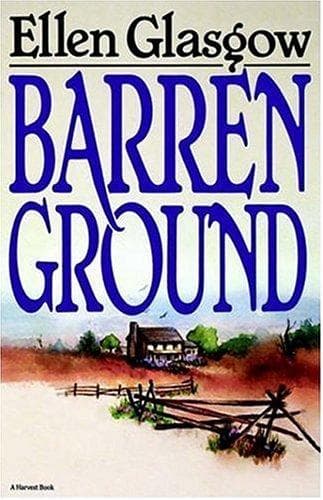
Country life -- Fiction; Pastoral fiction; Piedmont (U.S. : Region) -- Fiction; Virginia -- Fiction
"You mean you wouldn't care if I were to die a drunkard like my father?"
His voice trembled, and she saw that he was wrestling with man's
inability to believe that a woman's love can perish while his own still
survives.
"No, I shouldn't care."
"You're hard, Dorinda, as hard as a stone."
Her smile was exultant. "Yes, I am hard. I'm through with soft things."
Turning her back on him, she walked rapidly away over the ploughed
ground in the direction of the house. Oh, if the women who wanted love
could only know the infinite relief of having love over!
XI
On an afternoon in October, Dorinda stood under the harp-shaped pine in
the graveyard and looked down on the farm.
The drift of autumn was in the air; the shadows from the west were
growing longer; and in a little while Nimrod, the farm boy, would let
down the bars by the watering-trough, and the seven Jersey cows would
file sleepily across the road and the lawn to the cow-barn. At the first
glimpse of Nimrod she would run down and slip into her overalls. Ever
since the cows had come from Green Acres, she had milked them morning
and evening, and she was wondering now how many more she could handle
with only Fluvanna to help her. Only by doing the work herself and
keeping a relentless eye on every detail, could she hope to succeed in
the end. If she were once weak enough to compromise with the natural
carelessness of the negroes, she knew that the pails and pans would not
be properly scalded, and the milk would begin to lose its quality.
Fluvanna was the superior of most ignorant white women; but even
Fluvanna, though she was, as Dorinda said to herself, one in a thousand,
would slight her work as soon as she was given authority over others.
There were times when it seemed to Dorinda that this instinct to slight
was indigenous to the soil of the South. In the last six months she had
felt the temptation herself. There had been hours of weariness when it
had seemed to her that it was better to be swift and casual than to be
slow and thorough; but she had always suppressed the impulse before it
was translated into outward negligence. Would her power of resistance
survive, she wondered, or would it yield inevitably to the surrounding
drought of energy?
Public-domain text, read in full here on John Shaqi.
Reviews
Reviews
No reviews yet
Be the first to share your thoughts on this work.
Elsewhere in the archive
Join the Discussion
Join the discussion
Sign in to leave a comment or review.
Sign InorCreate an account