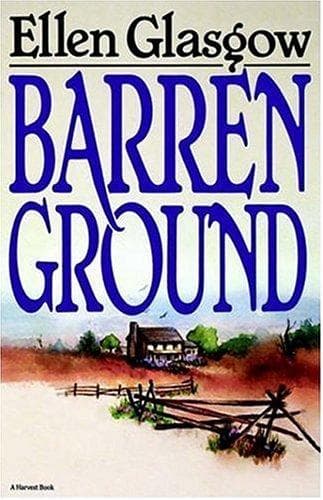
Country life -- Fiction; Pastoral fiction; Piedmont (U.S. : Region) -- Fiction; Virginia -- Fiction
"I know you didn't want me at the funeral, Dorinda," he said, "but it
was all I could do to show my respect for your father. He was one of the
best men who ever lived."
Her breast quivered with pain, but she moved on without appearing to be
aware of his presence.
"I was afraid you were angry because I came," he continued.
At this her pride was swallowed up in bitterness, and she stopped and
looked back. "You had no right to come. You knew I did not want you
there."
Without replying to her charge, he stared at her as if he were amazed by
the change in her face. "This is the first time you've looked at me
since you came home," he said. "You've treated me as if I were the dirt
under your feet."
Her hand was on the slender bough of a pine, and stripping the needles
from the branch, she flung them out on the wind with a passionate
gesture. Over the chaos in her mind there darted the shadow of a regret.
"If only I had killed him that night!"
"Even now, you won't let your eyes rest on me," he complained. "If you'd
given me a chance, I'd have done anything you wanted. But you never gave
me a chance. You never listened."
Her gaze, which had been fixed on the horizon beyond him, swept back to
his face. "Your following me won't make me listen."
"If only you knew what I've suffered."
She was looking at him now with merciless eyes. For this thing she had
ruined her life! Then, before the thought had left her mind, she
realized that in his presence, with her eyes on his face, she was
farther away from him than she had been in New York. Yesterday, he had
had power over her senses; to-morrow, he might have power again over her
memory; but at this instant, while they stood there, so close together
that she could almost feel his breath on her face, her senses and her
memory alike were delivered from the old torment of love.
"My nerve is going," he said weakly, attempting to soften her. "I've
started drinking like Father."
Looking at him, she admitted that it was only her feeling for him, not
the man himself, that had changed. Superficially, in spite of excessive
drinking, he was as attractive as he had ever been; yet this appeal,
which she had found so irresistible two years ago, failed now to awaken
the faintest tremor in her heart. The contrast between his brown-black
eyes and his red hair seemed to her artificial: there was something
repellent to her in the gleam of his white teeth through his short red
moustache. These were the physical details that had once affected her so
deeply; these traits which she saw now, for the first time, in the
spectral light of disenchantment.
"Can you never understand," she asked suddenly, "that I don't hate you
because you mean to me--just nothing."
"You are sending me straight to the dogs."
She laughed. How theatrical men were! Beneath her ridicule, she felt the
cruelty which gnaws like a worm at the heart of emotion in its decay.
"Why should I care?" she demanded.
Public-domain text, read in full here on John Shaqi.
Reviews
Reviews
No reviews yet
Be the first to share your thoughts on this work.
Elsewhere in the archive
Join the Discussion
Join the discussion
Sign in to leave a comment or review.
Sign InorCreate an account