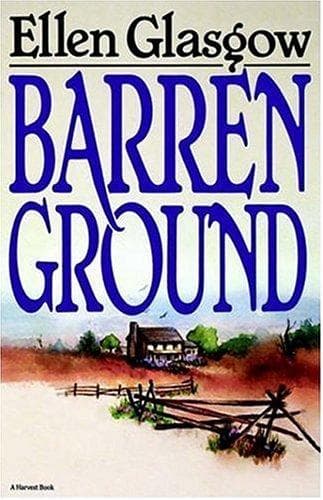
Country life -- Fiction; Pastoral fiction; Piedmont (U.S. : Region) -- Fiction; Virginia -- Fiction
The brilliant autumn day had declined into a wan evening. From the dark
fields the wind brought the trail of woodsmoke mingled with the
effluvium of rotting leaves; and this scent invaded her thoughts like
the odour of melancholy. Not even the frosty air or the fragrant breath
of the cows in the barn could dispel the lethargy which had crept over
her. "I'm tired out," she reasoned. "I've been going too hard the last
six months, and I feel the strain as soon as I stop." Though she was
saddened by the haunting pathos of life, she did not feel the intimate
pang of grief. All that, it seemed to her, was over for ever. The power
to pity was still hers, for compassion is a detached impulse, but she
had lot beyond recall the gift of poignant emotion. Nothing had
penetrated that dead region around her heart. Not her father's death,
not her mother's illness--nothing. Drought had withered her, she told
herself cynically, and the locust had eaten away the green of her
spirit.
In the morning, Rufus went off on the early train, and Dorinda drew a
breath of relief as she turned back to her work. The shock of the
tragedy appeared to have cleared the boy's temper, and he showed genuine
distress when he parted from his mother. "I feel as if I'd never see her
again," he said to Dorinda on the porch, while he was waiting for the
farmer who had promised to stop for him on the way to the station.
Dorinda shook her head. Helplessness in the face of misery acted always
as an irritant on her nerves. "You never can tell," she replied. "But
remember all you have cost her and try to keep straight in the future."
"I swear I'll never give her another minute's worry," he responded,
stuffing his handkerchief into his pocket.
Perhaps he meant it; but it seemed to Dorinda that his repentance, like
his gift with tools, was too facile. "Whatever comes of this, it has
been the death of Ma," she thought, as she went into the house.
When the day's churning was over, and she was in her mother's room, the
new doctor from the Courthouse arrived with his instruments and his
medicine case. He was a brisk, very ugly young man, with an awkward
raw-boned figure, and an honest face which was covered with unsightly
freckles. As different from Jason as any man could well be! He had risen
by sheer ability from the poorer class, and already, notwithstanding his
plain appearance and uncompromising honesty, he had built up a better
practice than the hereditary one of the Greylocks. For one thing, he
insisted upon having his fees paid, and it was natural, Dorinda had
discovered, to value advice more highly when it was not given away.
Public-domain text, read in full here on John Shaqi.
Reviews
Reviews
No reviews yet
Be the first to share your thoughts on this work.
Elsewhere in the archive
Join the Discussion
Join the discussion
Sign in to leave a comment or review.
Sign InorCreate an account