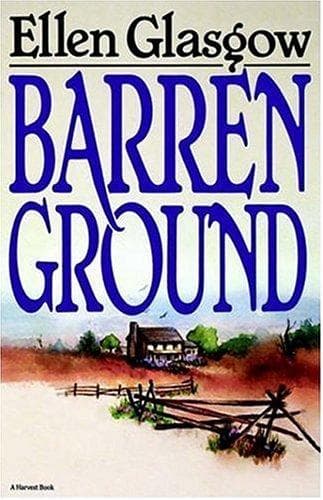
Country life -- Fiction; Pastoral fiction; Piedmont (U.S. : Region) -- Fiction; Virginia -- Fiction
When the buggy had disappeared, she retraced her steps to the house and
entered her mother's room with a smile on her lips.
"You'll have to rest now, Ma, no matter how you hate it."
At Dorinda's cheerful voice, the old woman turned over and looked at her
daughter as if she were a stranger.
"I don't know how you'll manage," she answered; but her tone was
perfunctory.
"Oh, we'll manage all right. Don't you worry. Just try to get well, Ma."
A change of expression rippled like a shadow over the grey features, and
passed without leaving a trace. "I was afraid maybe the doctor didn't
think I was sick enough to stay in bed. I know I ain't exactly sick, but
I seem to have given way. I reckon Mary Joe can look after the chickens
till I'm able to be up."
After this she fell into a doze from which she did not awaken until
Dorinda brought her favourite dinner of jowl and turnip salad.
"The doctor says you must eat, Ma, or you'll never get back your
strength."
"I know I ought to, daughter, but I feel as if something was choking
me."
Day after day, month after month. Nothing else all through the autumn
and winter.
Though Mrs. Oakley lived more than a year longer, she was never able
again to leave her bed. For the greater part of the time she lay, silent
and inert, in a state between waking and sleeping, unconcerned after all
her fruitless endeavours. Rufus, she never asked for, and when his
letters were read to her, she would smile vaguely and turn away as if
she had ceased to be interested. Old Rambler spent his days on a mat at
the side of her bed, and Flossie lay curled up on the patchwork quilt
over her feet. If they were absent long, she would begin to move
restlessly, and beg presently that they should be brought back. At the
end, they were the only companions that she desired, for, as she said
once, they "did not bother her with questions." The tragedy to Dorinda
was not so much in her mother's slow dying as in her unconditional
surrender to decay. For more than forty years she had fought her
dauntless fight against the sordid actuality, and at the last she
appeared to become completely reconciled to her twin enemies, poverty
and dirt. Nothing made any difference to her now, and because nothing
made any difference to her, dying was the happiest part of her life.
"There ain't any use struggling," she said once, while Dorinda was
cleaning her room, and after a long pause, "It doesn't seem just right
that we have to be born. It ain't worth all the trouble we go through."
Public-domain text, read in full here on John Shaqi.
Reviews
Reviews
No reviews yet
Be the first to share your thoughts on this work.
Elsewhere in the archive
Join the Discussion
Join the discussion
Sign in to leave a comment or review.
Sign InorCreate an account