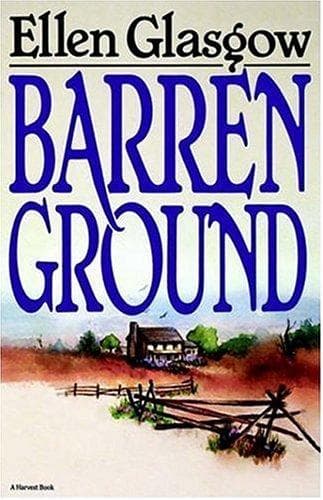
Country life -- Fiction; Pastoral fiction; Piedmont (U.S. : Region) -- Fiction; Virginia -- Fiction
Would the idea ever grow familiar to her? Could she ever live with the
fact, acknowledged and yet unregarded, as she had lived with the fact of
her marriage? "There never was a better man in the world," she said
aloud. Here on the farm she found herself missing him with the first
vague sense of loss. The insensibility which had protected her at the
station disappeared when her mind dwelt on his good qualities,--his
kindness, his charity, his broad tolerance of her prejudices. She knew
that she should miss him more and more in all the details of the farm,
and that she should begin to sorrow for him as soon as she had time to
realize that she had lost him for ever. Yesterday was a void in her
mind. When she thought of the long day after her return from the
station, she could remember only the incredible tenderness of John
Abner, and the visit in the afternoon from James Ellgood, who had told
her that the news of the wreck had just travelled as far as the farms
beyond Whippernock River, and that the absent minister was returning at
midnight.
On this, the second day after Nathan's death, the primitive ceremonies
of the funeral began. The earliest and one of the most depressing signs
of mourning was the loud demoralization of the negroes, who rose to the
funeral as fish to bait, and became immediately incapable of any work
except lamenting the dead. As long as there was hope left in tragedy,
they were able to brace themselves to Herculean exertions; but
superstition enslaved them as soon as death entered the house. The cows,
of course, had to be milked; but with the exception of the milking and
the necessary feeding of the stock, the place was like an abandoned farm
until the burial was over. Though Nathan's charred body remained at
Pedlar's Mill, the pall of mourning extended to Old Farm. John Abner had
even suggested sending a telegram to the hotel and the dairy in
Washington and letting the milk spoil; but the thought of all the good
cream that would be thrown away was too much for Dorinda's economical
instincts, and she had checked the impulse with the reminder that Nathan
had hated a waste. Yes, he had hated a waste, it is true, but he had
also loved a funeral. She remembered her mother's death, and the
completeness, the perfection, of his arrangements.
"Am I too hard?" Dorinda asked herself. "Ought I not to see that
everything gets so upset? After all, as Fluvanna says, a person does not
die but once." The small ironic demon of her sagacity concluded, in
spite of her will: "It is a good thing, or there wouldn't be any room
left for life."
Breakfast was no sooner over than she was engulfed in a continuous
deluge of sympathy. She was up in the attic with Fluvanna, going over
the black things which had been left from the mourning of her parents,
when the coloured woman glanced out of the dormer-window and gasped
breathlessly. "Thar they are, Miss Dorinda. You hurry up and get into
that black bombazine befo' they catch you out of mournin'."
Public-domain text, read in full here on John Shaqi.
Reviews
Reviews
No reviews yet
Be the first to share your thoughts on this work.
Elsewhere in the archive
Join the Discussion
Join the discussion
Sign in to leave a comment or review.
Sign InorCreate an account