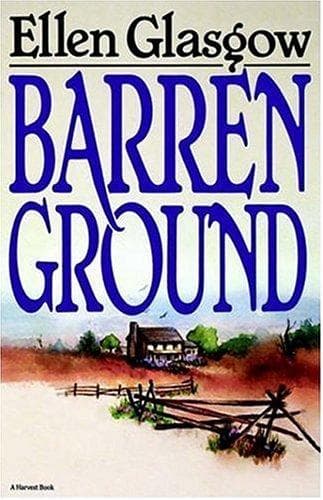
Country life -- Fiction; Pastoral fiction; Piedmont (U.S. : Region) -- Fiction; Virginia -- Fiction
Without John Abner, who was much to her, though not so much as she had
once believed he would be, and the indispensable memory of Nathan to
fall back upon, she sometimes wondered what her middle years would have
brought to her. John Abner, it is true, was subject to moods, and
recently he had been warped by a disappointment in love; but even if he
was not always easy to live with, she knew that, in his eccentric
fashion, he was attached to her. With Nathan, it was different. In the
years that had passed since his death, he had provided her with the
single verity which is essential to the happiness of a woman no longer
young, and that is a romantic background for her life. The power of
mental suggestion, which is stronger than all other influences in the
world of emotion, had cultivated around her this picturesque myth of
Nathan. No one spoke to her now of his ugliness, his crudeness, his
reputation as a laughing-stock; but whenever she went to church, she
beheld the imposing monument which public sentiment had placed over his
grave. Every soldier who went from Pedlar's Mill was reminded by
fire-breathing orators that the heroes of war must be worthy of the hero
of peace. Every appeal from the Red Cross in the county bore his name as
an ornament. As time went on this legend, which had sprung from simple
goodness, gathered a patina of tradition as a tombstone gathers moss.
Yes, it was something, Dorinda assured her rebellious heart, to have
been married to a hero.
In these years she might have married again; but a distaste for physical
love, more than the rigid necessity of her lot, kept her a widow. When,
a year after his wife's death, Bob Ellgood began, according to the
custom of the country, to motor over to Old Farm on Sunday, she was at
first flattered, then disturbed, and at last frankly provoked. Walking
through the pasture with him one afternoon in April, she reflected, not
without chagrin, that this also was one of the blessings that had come
at the wrong time. "Thirty years ago, before I knew Jason, I could have
loved him," she thought; and she remembered the Sunday mornings in
church when she had gazed longingly at his profile and had asked
herself, "Can he be the right one, after all?" She had wanted him then
with some sudden cobweb of fancy, which had been spun by an insatiable
hunger for life. If he had turned to her at that moment, she would have
loved him instead of Jason, and the future, which was now the past,
would have been different. But he had not wanted her then; he had first
to make a disappointing marriage, and by the time he had discovered his
mistake, it was too late to begin over again. Well, that was the way
things happened in life!
"Why won't you marry me, Dorinda?" he asked, wheeling abruptly round
from the pasture bars.
Public-domain text, read in full here on John Shaqi.
Reviews
Reviews
No reviews yet
Be the first to share your thoughts on this work.
Elsewhere in the archive
Join the Discussion
Join the discussion
Sign in to leave a comment or review.
Sign InorCreate an account