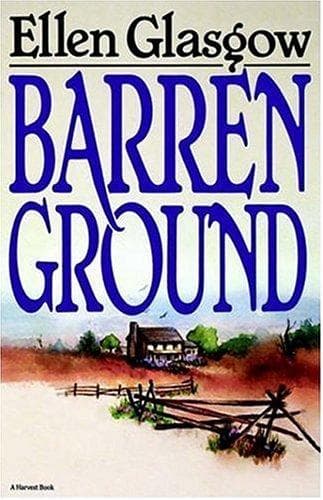
Country life -- Fiction; Pastoral fiction; Piedmont (U.S. : Region) -- Fiction; Virginia -- Fiction
Startled, she cast about for a reason which might appear plausible to
his masculine vanity. Was there a reason? Had she any reason behind her
resolve, or was aversion as physical a process as first love? Once he
had been handsome, a young blond giant, and now he was coarsened and
beefy, with a neck like a bull's and a rapidly spreading girth. There
was a purple flush in his face and puckers of flesh between his collar
and his slightly receding chin. This, also, was the way things happened,
she knew. Yet, after a moment's compassionate regard, she discerned that
he wore his unalluring age as easily as he had once worn his engaging
youth. He appeared unaware even that it might be a disadvantage in
courtship.
"Suppose I looked like that?" she said to herself, and then, "Perhaps
women are more fastidious than they used to be, but men have not yet
found it out. Or is it simply because I am independent and don't have to
marry for support that I can pick and refuse?"
"Have you decided why you won't marry me?" he inquired presently.
He was smiling at her, and it seemed to her--or was it only her
imagination?--that a gleam, like the star in the eyes of her prize bull,
flickered and went out in his glance. His face was so close to her that
for an instant she believed he was going to kiss her. Not that look!
something cried in her heart. Oh, never that look again!
"I can't tell," she answered, walking on again. "There isn't any reason.
I've finished with all that."
He was undismayed. "I'll keep on. I'm not in a hurry." Actually at
fifty-five, he was not in a hurry.
"It isn't any use," she replied as firmly as she could. "It isn't the
least use in the world."
"Well, I'll keep on anyway."
In the end, though she had spoken with decision, she had failed to
convince him. That had been two years ago, and he still came in his big
car every Sunday afternoon. But as he had warned her, he was not in a
hurry, and his courtship was as deliberate as his general habit of body.
Although it seemed to her that she had grown wiser with the years, she
had never entirely abandoned her futile effort to find a meaning in
life. Hours had come and gone when she had felt that there was no
permanent design beneath the fragile tissue of experience; but the moral
fibre that had stiffened the necks of martyrs lay deeply embedded in her
character if not in her opinions. She was saved from the aridness of
infidelity by that robust common sense which had preserved her from the
sloppiness of indiscriminate belief. After all, it was not religion; it
was not philosophy; it was nothing outside her own being that had
delivered her from evil. The vein of iron which had supported her
through adversity was merely the instinct older than herself, stronger
than circumstances, deeper than the shifting surface of emotion; the
instinct that had said, "I will not be broken." Though the words of the
covenant had altered, the ancient mettle still infused its spirit.
Public-domain text, read in full here on John Shaqi.
Reviews
Reviews
No reviews yet
Be the first to share your thoughts on this work.
Elsewhere in the archive
Join the Discussion
Join the discussion
Sign in to leave a comment or review.
Sign InorCreate an account