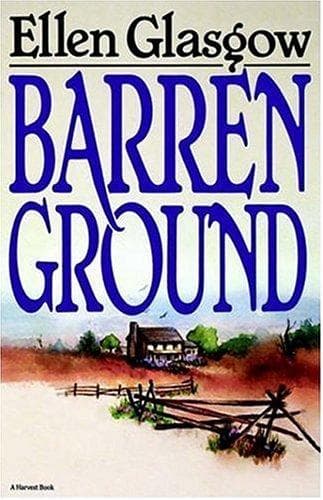
Country life -- Fiction; Pastoral fiction; Piedmont (U.S. : Region) -- Fiction; Virginia -- Fiction
As the weeks passed, she grew to look for his chair when she returned
from work in the fields. There was no eagerness, no anxiety even. There
was merely the wonder if she should still find him in the pale afternoon
sunshine, watching the road for something that never came. If he had
been absent, she would scarcely have missed him; yet, in a way, his
wheel-chair made the lawn, or the fireside on wet days, more homelike.
He was a poor thing, she felt, to look forward to, but at least he was
dependent upon her compassion.
Then one afternoon in November, when she returned, riding her white
horse through the flame and dusk of the sunset, she saw that the
wheel-chair was not in its accustomed place between the porch and the
"rockery." When she had dismounted at the stable door and watched the
bedding down of Snowbird, she walked slowly back to the house. Even
before she met Mirandy running to look for her, she knew that Jason was
dead.
"He 'uz settin' out dar de hull evelin'," began Mirandy, who being old
still spoke the vivid dialect of her ancestors. "He sot out dar jes' lak
he's done day in an' day out w'ile I wuz gittin' thoo wid de ironin'.
Den w'en de time come fuh his eggnog, I beat it up jes' ez light, en
tuck it out dar ter de cheer, en dar he wuz layin' back, stone daid, wid
de blood all ovah de rugs en de grass. He died jes' ez quick ez ern he
ain' nevah ketched on ter w'at wuz gwinter happen. 'Fo' de Lawd, hit
wa'n't my fault, Miss Dorindy. I 'uz jes' gittin' erlong thoo wid de
ironin', lak you done tole me."
"No, it wasn't your fault, Mirandy. Have you telephoned for the doctor?"
"Yas'm, Fluvanna, she done phone fuh 'im right straight away. We is done
laid 'im out on de baid. You'd 'low jes' ter look at 'im dat hit wuz a
moughty pleasant surprise ter find out dat he wuz sholy daid."
Turning away from her, Dorinda went into the spare room, where the fire
was out, and in deference to one of Aunt Mehitable's superstitions,
Mirandy had draped white sheets over the furniture and the pictures. The
windows were wide open. In the graveyard on the curve of the hill, she
could see the great pine towering against the evening sky. A stray sheep
was bleating somewhere in the meadow, and it seemed to her that the
sound filled the universe.
So at last he was dead. He was dead, and she could never know whether or
not he remembered. She could never know how much or how little she had
meant in his life. And more tragic than the mystery that surrounded him
at the end, was the fact that neither the mystery nor his end made any
difference. The passion that had ruined her life thirty years ago was
nothing, was less than nothing, to her to-day. She was not glad that he
was dead. She was not sorry that he had died alone.
Public-domain text, read in full here on John Shaqi.
Reviews
Reviews
No reviews yet
Be the first to share your thoughts on this work.
Elsewhere in the archive
Join the Discussion
Join the discussion
Sign in to leave a comment or review.
Sign InorCreate an account