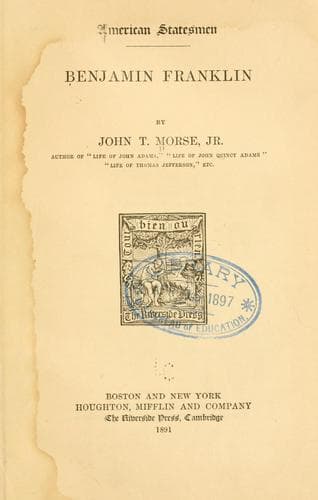
Benjamin FranklinMorse, John T., Jr. (John Torrey)
History
Benjamin Franklin
Morse, John T., Jr. (John Torrey)
Franklin, Benjamin, 1706-1790
Otis, James, opposition to Stamp Act, 107, 111.
Oxford University makes Franklin Doctor of Laws, 75.
Parliament, supremacy of, over colonies, denied by Franklin, 47;
asserted by Shirley, 46;
by Parliament, 64;
Stamp Act raises question, 110;
denied by Pitt, 114, 117;
debate over declaratory resolution in Parliament, 118;
arguments of Franklin before Commons, 124-126;
distinction between internal and external taxes, 130;
debates under Dartmouth's ministry, 167-170.
Parton, James, Life of Franklin, quoted,
3, 16, 23, 36, 97, 208, 222, 232, 240, 241, 271, 281, 283, 407, 415, 419.
"Paxton massacre," 87-89;
Paxton boys threaten Indians in Philadelphia, 88;
overawed by Franklin's preparations, 89;
unpopularity of latter with lower classes, 90.
Pelham, Henry, said to have planned a Stamp Act, 104.
Penn family, proprietaries, strained relations with people, 49, 60;
refuse to allow lands to be taxed by Assembly, 61, 62;
interviews with Franklin, 67;
complain to Pennsylvania of him, 68;
endeavor to get taxing acts disallowed, 69;
denied by the board of trade, 70, 72;
continue struggle with Assembly, 90;
their corrupt practices, 94, 95;
famous epitaph by Franklin, 95;
his hostility later diminished, 95.
Penn, John, appointed governor of Pennsylvania, 87;
agreeable beginning of administration, 87;
protected and directed by Franklin at time of Paxton massacre, 89;
vetoes bills of the Assembly, 90, 91.
Penn, Thomas, wishes Parliament to tax colonies, 49, 64.
Penn, William, suggests colonial union, 44.
Pennsylvania, reluctance to take military measures, 39, 49, 52;
controversy with proprietors, 60-64, 69, 72, 73, 90-99;
desires to be a crown colony, 63, 64, 91-93;
labors of Franklin in behalf of, 66-72, 101, 102;
adopts a state constitution, 211;
chooses Franklin president of legislature, 403, 404.
"Pennsylvania Gazette," published by Franklin, 12;
its character and success, 13, 23;
Franklin's writings in, 44.
Pitt, William, refuses audience to Franklin, 74;
opposes Stamp Act, 114, 117;
upholds American claim to self-taxation, 117;
denies parliamentary power over colonies, 118;
reorganizes cabinet, 147;
supports Shelburne, 148;
becomes Earl of Chatham, 148;
loses control of affairs, 148, 150;
statue erected in America, 149;
interview with Franklin, 196;
compliments Franklin in House of Lords, 198.
"Plain Truth," effect upon Pennsylvania, 39.
"Poor Richard's Almanac," 21;
its character and influence, 22;
wit and wisdom, 22, 23.
Pownall, Governor, favors barrier Western colonies, 57.
Pratt, Attorney-General [see Camden, Lord].
Price, Dr., humorous message of Franklin to, 217, 218.
Priestley, Dr., present at Privy Council hearing, 190;
describes Franklin's last day with him in London, 203;
letters of Franklin to, 204, 217;
protects Austin, 271.
Public-domain text, read in full here on John Shaqi.
Reviews
Reviews
No reviews yet
Be the first to share your thoughts on this work.
Elsewhere in the archive
Join the Discussion
Join the discussion
Sign in to leave a comment or review.
Sign InorCreate an account