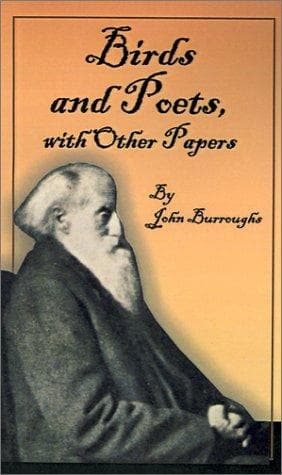
Birds and Poets : with Other PapersBurroughs, John
History
Birds and Poets : with Other Papers
Burroughs, John
American essays -- 19th century; Birds; Natural history -- Outdoor books; Nature
"Sweet bird! thy bower is ever green,
Thy sky is ever clear;
Thou hast no sorrow in thy song,
No winter in thy year."
The European cuckoo is evidently a much gayer bird than ours, and much
more noticeable.
"Hark, how the jolly cuckoos sing
'Cuckoo!' to welcome in the spring,"
says John Lyly three hundred years agone. Its note is easily imitated,
and boys will render it so perfectly as to deceive any but the shrewdest
ear. An English lady tells me its voice reminds one of children at play,
and is full of gayety and happiness. It is a persistent songster,
and keeps up its call from morning to night. Indeed, certain parts
of Wordsworth's poem--those that refer to the bird as a mystery, a
wandering, solitary voice--seem to fit our bird better than the European
species. Our cuckoo is in fact a solitary wanderer, repeating its loud,
guttural call in the depths of the forest, and well calculated to arrest
the attention of a poet like Wordsworth, who was himself a kind of
cuckoo, a solitary voice, syllabling the loneliness that broods over
streams and woods,--
"And once far off, and near."
Our cuckoo is not a spring bird, being seldom seen or heard in the North
before late in May. He is a great devourer of canker-worms, and, when
these pests appear, he comes out of his forest seclusion and makes
excursions through the orchards stealthily and quietly, regaling himself
upon those pulpy, fuzzy titbits. His coat of deep cinnamon brown has a
silky gloss and is very beautiful. His note or call is not musical
but loud, and has in a remarkable degree the quality of remoteness and
introvertedness. It is like a vocal legend, and to the farmer bodes
rain.
It is worthy of note, and illustrates some things said farther back,
that birds not strictly denominated songsters, but criers like the
cuckoo, have been quite as great favorites with the poets, and
have received as affectionate treatment at their hands, as have the
song-birds. One readily recalls Emerson's "Titmouse," Trowbridge's
"Pewee," Celia Thaxter's "Sandpiper," and others of a like character.
It is also worthy of note that the owl appears to be a greater favorite
with the poets than the proud, soaring hawk. The owl is doubtless the
more human and picturesque bird; then he belongs to the night and its
weird effects. Bird of the silent wing and expansive eye, grimalkin in
feathers, feline, mousing, haunting ruins" and towers, and mocking the
midnight stillness with thy uncanny cry! The owl is the great bugaboo of
the feathered tribes. His appearance by day is hailed by shouts of
alarm and derision from nearly every bird that flies, from crows down
to sparrows. They swarm about him like flies, and literally mob him back
into his dusky retreat. Silence is as the breath of his nostrils to him,
and the uproar that greets him when he emerges into the open day seems
to alarm and confuse him as it does the pickpocket when everybody cries
Thief.
Public-domain text, read in full here on John Shaqi.
Reviews
Reviews
No reviews yet
Be the first to share your thoughts on this work.
Join the Discussion
Join the discussion
Sign in to leave a comment or review.
Sign InorCreate an account