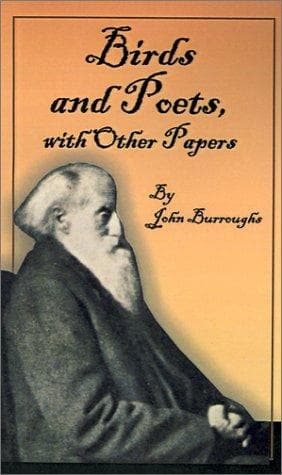
Birds and Poets : with Other PapersBurroughs, John
History
Birds and Poets : with Other Papers
Burroughs, John
American essays -- 19th century; Birds; Natural history -- Outdoor books; Nature
His single bird-poem, aside from the song I have quoted, is "The
Blackbird," the Old World prototype of our robin, as if our bird had
doffed the aristocratic black for a more democratic suit on reaching
these shores. In curious contrast to the color of its plumage is its
beak, which is as yellow as a kernel of Indian corn. The following are
the two middle stanzas of the poem:--
"Yet, though I spared thee all the spring,
Thy sole delight is, sitting still,
With that gold dagger of thy bill
To fret the summer jenneting.
"A golden bill! the silver tongue
Cold February loved is dry;
Plenty corrupts the melody
That made thee famous once, when young."
Shakespeare, in one of his songs, alludes to the blackbird as the
ouzel-cock; indeed, he puts quite a flock of birds in this song:--
"The ouzel-cock so black of hue,
With orange tawny bill;
The throstle with his note so true,
The wren with little quill;
The finch, the sparrow, and the lark,
The plain song cuckoo gray,
Whose note full many a man doth mark,
And dares not answer nay."
So far as external appearances are concerned,--form, plumage, grace of
manner,--no one ever had a less promising subject than had Trowbridge
in the "Pewee." This bird, if not the plainest dressed, is the most
unshapely in the woods. It is stiff and abrupt in its manners and
sedentary in its habits, sitting around all day, in the dark recesses
of the woods, on the dry twigs and branches, uttering now and then
its plaintive cry, and "with many a flirt and flutter" snapping up its
insect game.
The pewee belongs to quite a large family of birds, all of whom have
strong family traits, and who are not the most peaceable and harmonious
of the sylvan folk. They are pugnacious, harsh-voiced, angular in form
and movement, with flexible tails and broad, flat, bristling beaks that
stand to the face at the angle of a turn-up nose, and most of them wear
a black cap pulled well down over their eyes. Their heads are large,
neck and legs short, and elbows sharp. The wild Irishman of them all
is the great crested flycatcher, a large, leather-colored or
sandy-complexioned bird that prowls through the woods, uttering its
harsh, uncanny note and waging fierce warfare upon its fellows. The
exquisite of the family, and the braggart of the orchard, is the
kingbird, a bully that loves to strip the feathers off its more timid
neighbors such as the bluebird, that feeds on the stingless bees of the
hive, the drones, and earns the reputation of great boldness by teasing
large hawks, while it gives a wide berth to little ones.
The best beloved of them all is the phoebe-bird, one of the firstlings
of the spring, of whom so many of our poets have made affectionate
mention.
Public-domain text, read in full here on John Shaqi.
Reviews
Reviews
No reviews yet
Be the first to share your thoughts on this work.
Join the Discussion
Join the discussion
Sign in to leave a comment or review.
Sign InorCreate an account