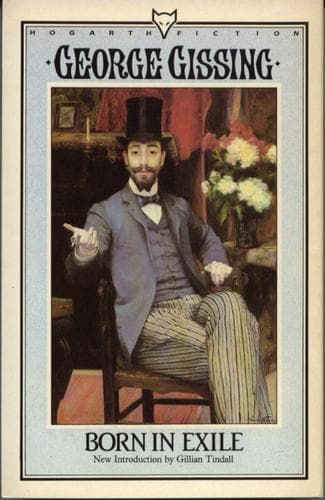
England -- Social life and customs -- 19th century -- Fiction; English fiction -- 19th century
Society, then--at all events that part of it likely to be affected by
his activity? Suppose him an ordained priest, performing all the
functions implied in that office. Why, to think only of examples
recognised by the public at large, how would he differ for the worse
from this, that, and the other clergyman who taught Christianity, all
but with blunt avowal, as a scheme of human ethics? No wolf in sheep's
clothing he! He plotted against no man's pocket, no woman's honour; he
had no sinister design of sapping the faith of congregations--a scheme,
by-the-bye, which fanatic liberators might undertake with vast
self-approval. If by a word he could have banished religious dogma from
the minds of the multitude, he would not have cared to utter it.
Wherein lay, indeed, a scruple to be surmounted. The Christian priest
must be a man of humble temper; he must be willing, even eager, to sit
down among the poor in spirit as well as in estate, and impart to them
his unworldly solaces. Yes, but it had always been recognised that some
men who could do the Church good service were personally unfitted for
those meek ministrations. His place was in the hierarchy of intellect;
if he were to be active at all, it must be with the brain. In his
conversation with Buckland Warricombe, last October, he had spoken not
altogether insincerely. Let him once be a member of the Church
militant, and his heart would go with many a stroke against that
democratic movement which desired, among other things, the Church's
abolition. He had power of utterance. Roused to combat by the
proletarian challenge, he could make his voice ring in the ears of men,
even though he used a symbolism which he would not by choice have
adopted.
For it was natural that he should anticipate distinction. Whatever his
lot in life, he would not be able to rest among an inglorious
brotherhood. If he allied himself with the Church, the Church must
assign him leadership, whether titular or not was of small moment. In
days to come, let people, if they would, debate his history, canvass
his convictions. His scornful pride invited any degree of publicity,
when once his position was secure.
Public-domain text, read in full here on John Shaqi.
Reviews
Reviews
No reviews yet
Be the first to share your thoughts on this work.
Elsewhere in the archive
Join the Discussion
Join the discussion
Sign in to leave a comment or review.
Sign InorCreate an account