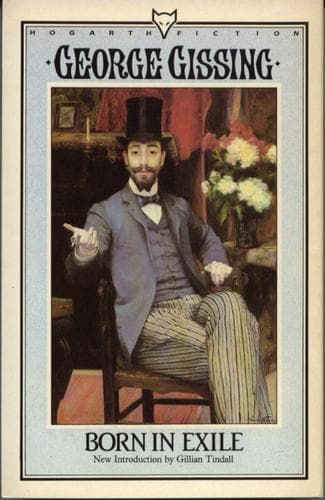
England -- Social life and customs -- 19th century -- Fiction; English fiction -- 19th century
Among the general concourse might have been discovered two or three
representatives of the wage-earning multitude which Kingsmill depended
upon for its prosperity, but their presence was due to exceptional
circumstances; the College provided for proletarian education by a
system of evening classes, a curriculum necessarily quite apart from
that followed by the regular students. Kingsmill, to be sure, was no
nurse of Toryism; the robust employers of labour who sent their sons to
Whitelaw--either to complete a training deemed sufficient for an active
career, or by way of transition-stage between school and
university--were for the most part avowed Radicals, in theory scornful
of privilege, practically supporters of that mode of freedom which
regards life as a remorseless conflict. Not a few of the young men
(some of these the hardest and most successful workers) came from poor,
middle-class homes, whence, but for Sir Job's foundation, they must
have set forth into the world with no better equipment of knowledge
than was supplied by some 'academy' of the old type: a glance
distinguished such students from the well-dressed and well-fed
offspring of Kingsmill plutocracy. The note of the assembly was
something other than refinement; rather, its high standard of health,
spirits, and comfort--the characteristic of Capitalism. Decent
reverence for learning, keen appreciation of scientific power, warm
liberality of thought and sentiment within appreciable limits,
enthusiasm for economic, civic, national ideals,--such attributes were
abundantly discoverable in each serried row. From the expanse of
countenances beamed a boundless self-satisfaction. To be connected in
any way with Whitelaw formed a subject of pride, seeing that here was
the sturdy outcome of the most modern educational endeavour, a
noteworthy instance of what Englishmen can do for themselves, unaided
by bureaucratic machinery. Every student who achieved distinction in
to-day's class lists was felt to bestow a share of his honour upon each
spectator who applauded him.
With occasional adjustment of his eye-glasses, and smiling his smile of
modest tolerance, Mr. Warricombe surveyed the crowded hall. His
connection with the town was not intimate, and he could discover few
faces that were familiar to him. A native and, till of late, an
inhabitant of Devon, he had come to reside on his property near
Kingsmill because it seemed to him that the education of his children
would be favoured by a removal thither. Two of his oldest friends held
professorships at Whitelaw; here, accordingly, his eldest son was
making preparation for Cambridge, whilst his daughter attended classes
at the admirable High School, of which Kingsmill was only less proud
than of its College.
Seated between his father and his sister, Buckland drew their attention
to such persons or personages as interested his very selective mind.
Public-domain text, read in full here on John Shaqi.
Reviews
Reviews
No reviews yet
Be the first to share your thoughts on this work.
Join the Discussion
Join the discussion
Sign in to leave a comment or review.
Sign InorCreate an account