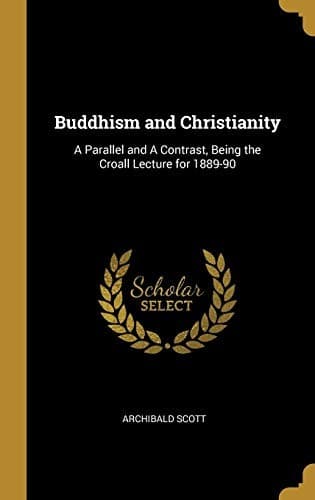
Buddhism and Christianity: A Parallel and a ContrastScott, Archibald
Religion
Buddhism and Christianity: A Parallel and a Contrast
Scott, Archibald
Buddhism -- Relations -- Christianity; Christianity and other religions -- Buddhism
An earnest Buddhist, he seems to have been something better. He called
himself Pryadarsi,[330] the “beloved of the gods,” and a Daniel indeed
he appears to have been, raised up for the blessing of millions. His
edicts—stone inscriptions found all over India—the first written
testimonies which Buddhism left of itself,[331] all breathe a lofty
spirit of righteousness and kindness and toleration, appealing to both
Brahman and Buddhist, and commending themselves at this day, “to Jew and
Christian and Moslem alike, as part of the universal religion of
humanity.”[332] One of them refers to a council which he assembled at
Patna, for the pacification and reformation of the Order. During its
session the ancient collections of rules and dogmas were rehearsed, and
as the list is considerably shorter than the contents of the Tripitaka,
we may be sure that the Southern tradition that Buddha himself was the
author of all the books comprising that collection has no foundation in
fact.[333] A far more momentous act of this ancient council than the
recension of the canon, was that of establishing the first great
Buddhist missions. To a revived and reformed Order the suggestion of the
pious king, that they should go forth and fulfil their great teacher’s
original commission, was welcome. Their dissensions, as has often
happened in Christendom, were due to their living to themselves. An army
inactive in quarters, is more likely to quarrel or mutiny than one in
service in the field. These good Buddhists wisely determined to carry
the war of deliverance beyond them, and so into the Punjab, Kashmir, the
Central Himalayan regions, over into the Malay Peninsula, went the
missionaries, armed only with the words of the Law or the legends which
had been floating round the memory of their master, and supported only
by the offerings put into their alms-dish, to gain whatever victories
they could in the fair conflict of reason with reason.[334]
Public-domain text, read in full here on John Shaqi.
Reviews
Reviews
No reviews yet
Be the first to share your thoughts on this work.
Elsewhere in the archive
Join the Discussion
Join the discussion
Sign in to leave a comment or review.
Sign InorCreate an account