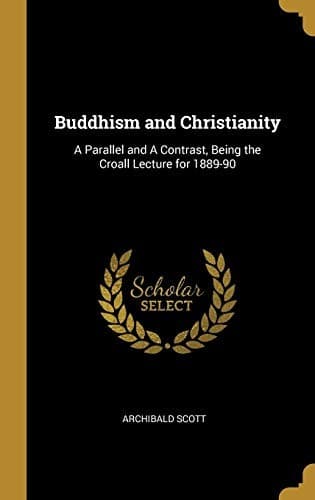
Buddhism and Christianity: A Parallel and a ContrastScott, Archibald
Religion
Buddhism and Christianity: A Parallel and a Contrast
Scott, Archibald
Buddhism -- Relations -- Christianity; Christianity and other religions -- Buddhism
In China, two hundred and seventy years ago, originated a sect whose
adherents, scattered through the villages of the Eastern Provinces, and
belonging principally to the lower classes of society, may be called
Protestant or Reformed Buddhists. They are described by Dr. Edkins[398]
as opposed to idolatry in all its forms, as having no temple, but only
plain meeting-houses, signalised with only the common tablet to heaven,
earth, king, parents, and teachers, as their symbol of reverence. Their
worship consists not in ceremonies, but in quiet meditation, and inner
adoration of the all-pervading Buddha. They are called the “Do-Nothing
Sect,” not because they are idle, like the ignorant inmates of the
monasteries—for they are really industrious and virtuous,—but because
they hold that the highest virtue is never intentional, but wholly
unconscious of self. Like M. Aurelius,[399] they consider that to ask to
be “paid for virtue is as if the eye demanded a recompence for seeing.”
In thinking of them, the words of the Lord Jesus recur to us: “Do good,
and lend, hoping for nothing again.” George Fox, and the quiet and
charitable Society which he founded, and which still continues in formal
garb his protest against all formalism in worshipping God, not by
clamouring to Him, but in silently waiting till He speaks, seems to be
the realisation of what these good Wu-wei-Kiau aspire to in their
religion. They have not been able to free themselves from Buddhism or
Taoism. Buddha, though not worshipped, is believed in by them, and they
have found an object of adoration in Kîn-mu, the Golden Mother of the
soul, who can protect and deliver from calamity, and even save those
that have died from misery. They have four principal festivals, two of
which celebrate the birth and death of Lo-tsu, their founder. On these
occasions three small cups of tea and nine tiny loaves of bread are
placed on the tables, according to the appointment of Lo-tsu himself. On
this account they are nicknamed “the Tea and Bread Sect.” They are
strict vegetarians, but in no other sense ascetics, honouring marriage
and family life, and having no monastic institute among them. They aver
that one of their leaders during a persecution was crucified, and their
great hope is that the world will soon come to an end, and that the
Golden Mother will appear, to take all her children—all who believe in
her as they do—home to her beautiful heaven.
Public-domain text, read in full here on John Shaqi.
Reviews
Reviews
No reviews yet
Be the first to share your thoughts on this work.
Elsewhere in the archive
Join the Discussion
Join the discussion
Sign in to leave a comment or review.
Sign InorCreate an account