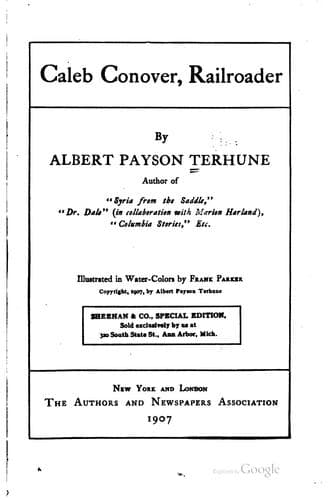
American fiction -- 20th century; Political fiction; Railroad stories; West (U.S.) -- Fiction
The capitalist whose doubtful bill he had shoved through the Assembly;
the coal-heaver whose wife’s funeral expenses he had paid; the Italian
peddler whose family he had saved from eviction; the countless poor whom
his secretly-donated coal, clothes and food had tided over hard winters;
the struggling farmer whose mortgage he had paid; the bartender he had
saved from a murderer’s fate: all these beneficiaries and more were
commanded, in this hour of stress, to remember the Boss’s generosity,
and to pay the debt by working for his election.
Checks of vast proportions (drawn ostensibly for railroad expenses) were
cashed by Shevlin, Bourke and the rest, and the proceeds hurled into
every crevice or vulnerable spot in the voting phalanx. The pick of the
Atlantic seaboard’s orators were summoned at their own price, and
commissioned to sway the people to the Machine’s cause. Conover even had
wild thoughts of winning favor with his home-city’s cultured classes by
beautifying Granite’s public gardens with the erecting of a heroic
marble statue of Ibid (who, he declared, was his favorite poet, and had
more sense than all the rest of the “Famous Quotation” authors put
together). When at length he was reluctantly convinced as to “Ibid’s”
real meaning, the Railroader ordered the papers to suppress the proposed
announcement and to substitute one to the effect that he intended to
donate a colossal figure of Blind Justice for the summit of the City
Hall.
On waged the fight. Disinterested outsiders beyond the scope of the
Machine’s attraction were daily drawn, by hundreds, into the Standish
camp. In the country districts his strength grew steadily and rapidly.
The people at large were aroused, not to the usual pitch of illogical
hysteria incident on a movement of the sort, but to a calm, resolute
jealousy of their own public rights. Which latter state every politician
knows to be immeasurably the more dangerous of the two.
Conover’s efforts, on the other hand were already bearing fruit. His
tireless energy, backed by his genius and the perfection of his system,
were hourly enlarging his following. The “railroad wards” and slums of
Granite and of other towns were with him to a man, prepared on Election
Day to hurl mighty cohorts of the Unwashed to the polls in their idol’s
behalf. Loyalty, self-interest, party allegiance, and more material
forms of pressure were binding throngs of others besides these
underworld denizens to the Conover standard. Not even the shrewdest
non-partisan dared forecast the result of the contest.
Public-domain text, read in full here on John Shaqi.
Reviews
Reviews
No reviews yet
Be the first to share your thoughts on this work.
Elsewhere in the archive
Join the Discussion
Join the discussion
Sign in to leave a comment or review.
Sign InorCreate an account