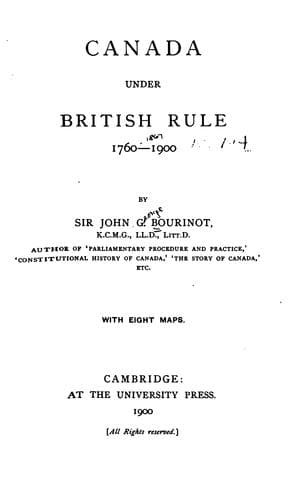
Canada under British Rule 1760-1900Bourinot, John George
History
Canada under British Rule 1760-1900
Bourinot, John George
Canada -- History
As in the days of French rule, the environs of Quebec and Montreal, and
the north side of the St. Lawrence between these two towns, presented
French Canadian life in its most picturesque and favourable aspect.
These settlements on the river formed one continuous village, with
tinned spires rising every few miles amid poplars, maples and elms.
While the homes of the seigniors and of a few professional men were more
commodious and comfortable than in the days of French rule, while the
churches and presbyteries illustrated the increasing prosperity of the
dominant religion, the surroundings of the _habitants_ gave evidences of
their want of energy and enterprise. But crime was rare in the rural
districts and intemperance was not so prevalent as in parts of the west.
Nearly 150,000 people of British origin resided in Lower Canada--a
British people animated for the most part by that spirit of energy
natural to their race. What prosperity Montreal and Quebec enjoyed as
commercial communities was largely due to the enterprise of British
merchants. The timber trade was chiefly in their hands, and the bank of
Montreal was founded by this class in 1817--seven years before the bank
of Upper Canada was established in Toronto. As political strife
increased in bitterness, the differences between the races became
accentuated. Papineau alienated all the British by his determination to
found a "_Nation Canadienne_" in which the British would occupy a very
inferior place. "French and British," said Lord Durham, "combined for no
public objects or improvements, and could not harmonise even in
associations of charity." The French Canadians looked with jealousy and
dislike on the increase and prosperity of what they regarded as a
foreign and hostile race. It is quite intelligible, then, why trade
languished, internal development ceased, landed property decreased in
value, the revenue showed a diminution, roads and all classes of local
improvements were neglected, agricultural industry was stagnant, wheat
had to be imported for the consumption of the people, and immigration
fell off from 52,000 in 1832 to less than 5000 in 1838.
Public-domain text, read in full here on John Shaqi.
Reviews
Reviews
No reviews yet
Be the first to share your thoughts on this work.
Elsewhere in the archive
Join the Discussion
Join the discussion
Sign in to leave a comment or review.
Sign InorCreate an account