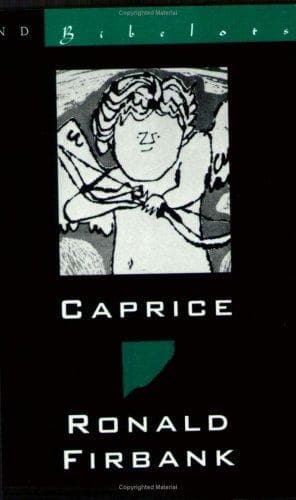
English fiction -- 20th century; London (England) -- Fiction; Theater -- Fiction; Young women -- Fiction
“So-so. I’ve been away on tour. Mildred Milson and Co. Oh! my Lord—it
was. No sooner did we get to Buxton—down in Derbyshire—than Miss Milson
fell sick and had to be left behind.”
“What was wrong with her?”
“Exposure.... On Bank Holiday some of the company hired a three-horse
char-à-banc and drove from Buxton over to Castleton Caves—my hat. What
hills!—and from there we went to take a squint at Chatsworth, where Miss
Milson came over queer.”
“And how does Mrs. Smee?”
“So-so.”
“One never sees her now.”
“There she sits all day, reading Russian novels. Talk of gloom!”
“Really?”
“Oh, it is!”
“Well.... I’m fond of thoughtful, theosophical reading, too, Mr. Smee,”
Mrs. Sixsmith said. “Madame Blavatsky and Mrs. Annie Besant are both
favourites with me.”
Mr. Smee jerked an eloquent thumb.
“Who have you brought along?”
“She’s a special pal of mine.”
“Married?”
“Mon Dieu,” Mrs. Sixsmith doubtfully said. “Je _crois_ que c’est une
Pucelle.”
“Never!” Mr. Smee, completely mystified, hazarded.
“Fie donc. Comme c’est _méchant._”
“Wee, wee.”
Mrs. Sixsmith tittered.
“She’s going into management very soon.”
“Swank?”
“We seek a Romeo, Mr. Smee.”
“Now, now...!”
“Don’t look like that, Mr. Smee—nobody’s asking you,” Mrs. Sixsmith
murmured.
Mr. Smee scratched reflectively his head.
“Who is it you’re after?” he asked.
“We fancied Mr. Weathercock might suit.”
“God has given him looks, but no brains,” Mr. Smee emphatically
declared. “No more brains than a cow in a field.”
“His is indeed a charming face,” Mrs. Sixsmith sighed. “And as to his
brains, Mr. Smee—why, come!”
“Who’s to create the countess?” he asked.
“Lady Capulet? It’s not determined yet.”
“Why not canvass the wife?”
“Has she been in Shakespeare before?”
“From the time she could toddle; in a _Midsummer Night’s Dream_, when
not quite two, she was the Bug with gilded wings.”
“Pet!”
“Sure....”
Mrs. Sixsmith clasped prayerfully her hands.
“And in Mr. Smee,” she said, “I see the makings of a fine Friar
Lawrence!”
“How’s that?”
“With a few choice _concetti._”
“Faith!”
“I see the lonely cell, the chianti-flask, the crucifix....”
“Gosh!”
“I see Verona ... the torrid sky ... the town ascending, up, up, up. I
hear the panting nurse. She knocks. Your priest’s eyes glisten. She
enters, blouse-a-gape—a thorough coster. You raise your cowl....
Chianti? She shakes her head. Benedictine? No! no! A little Chartreuse,
then? Certainly not! Nothing.... You squeeze her waist. Her cries ‘go
through’ Lady Capulet and her daughter in the distant city on their way
to mass. Romeo enters. So!” Mrs. Sixsmith broke off as Mr. Weathercock
and a curly-headed lad, followed by a swathed woman and a whey-faced
child, showed themselves upon the stairs.
Mrs. Sixsmith sought Miss Sinquier’s arm.
“Listen to me, my darling!” she said.
“Well?”
“Write.”
“What?”
“Write.”
“Why?”
“Because I fear we intrude.”
“Intrude?” Harold Weathercock exclaimed, coming up. “I assure you it’s a
treat....”
Public-domain text, read in full here on John Shaqi.
Reviews
Reviews
No reviews yet
Be the first to share your thoughts on this work.
Join the Discussion
Join the discussion
Sign in to leave a comment or review.
Sign InorCreate an account