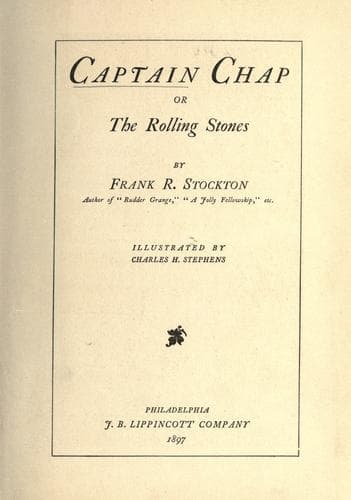
Captain Chap; or, The Rolling StonesStockton, Frank R.
General
Captain Chap; or, The Rolling Stones
Stockton, Frank R.
Florida -- Juvenile fiction; Teenage boys -- Juvenile fiction
In the course of the afternoon, however, some work appeared for the
captain of the tug-boat. Far out to sea a schooner was perceived, with
her foremast and part of her bowsprit gone, and endeavoring, against a
head-wind, to make her way to the refuge of the Breakwater.
There was a strong wind blowing from the north, with a chance of its
getting farther to the east before long, and it was considered doubtful
whether the disabled schooner would be able to get in before a storm
came on.
“Boys,” said the captain, coming aft to where our friends were sitting,
“I’ve made up my mind to go out and offer to tow that schooner in. I
might as well be making some money for the company as to lie here doing
nothing. But I think it’s going to be pretty rough, and, if you fellows
don’t care to go along, I’ll put you ashore.”
The boys, who had been so much interested in everything around them
that they had not even taken out their fishing-lines, cried out at once
that they would not think of going ashore. Nothing would please them
more than a trip out to sea.
“The rougher the better!” cried Chap. “I just want to feel what it is
like to be tossed on the ocean wave.”
“All right!” said the captain, with a grin. “We’ll toss you.”
[Illustration]
CHAPTER II.
A SEA VOYAGE.
It was not long after this little conversation that the tug-boat was
bravely puffing out to sea. The wind was strong and the waves ran
pretty high, but the boat made her way over the rough water without
difficulty.
The boys were delighted with the motion of the vessel as it plunged
over the waves, and none of them felt in the least degree sick.
Chap wished to go out on the bow, where he could stand and see the boat
“breast the billows;” but he was not allowed to do this, for every now
and then a shower of spray came over the bows, and he would have been
drenched to the skin in ten minutes. Even where they sat in the stern,
the boys were frequently treated to a shower of spray; but this, as
they wore their overcoats, they did not mind in the least.
It took them longer to near the schooner than they had supposed it
would, for she was making very slow headway against the wind, and in
some of her long tacks she seemed to the boys as if she were trying to
keep out of their way.
At last, however, they reached her, and the tug steamed close enough to
her side to allow the people on board to be hailed. But, to the disgust
of the captain of the tug-boat, his offers to tow the disabled vessel
into shelter were declined.
Her captain believed that he could work her in without any help, and he
did not wish to incur the expense of being towed.
“All right, then!” said the captain of the tug-boat to the boys, who
stood near him. “She can run in by herself, and perhaps she’ll make
the Breakwater in a week or two. We have lost nothing but some of our
owners’ coal, and you fellows have had a sea trip. And now we will run
back again.”
Public-domain text, read in full here on John Shaqi.
Reviews
Reviews
No reviews yet
Be the first to share your thoughts on this work.
Join the Discussion
Join the discussion
Sign in to leave a comment or review.
Sign InorCreate an account