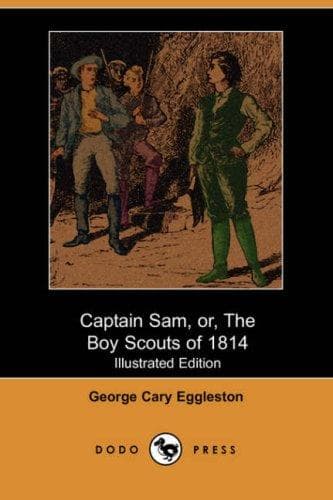
Captain Sam: The Boy Scouts of 1814Eggleston, George Cary
History
Captain Sam: The Boy Scouts of 1814
Eggleston, George Cary
United States -- History -- War of 1812 -- Fiction
The boys were drawn up in line, and their commander stood at six paces
from them.
"Attention!" he cried, "I wish you to know and remember that we are
engaged in no child's play. We are soldiers. You have not yet been
mustered into service, it is true, but you are soldiers, nevertheless,
and you shall obey as such. Listen. When it became known in the
neighborhood that I had determined to join General Jackson and serve
as a soldier you boys proposed to go with me. I agreed, with a
condition, and that condition was that we should organize ourselves
into a company, elect a captain, and march to Camp Jackson under his
command, not go there like a parcel of school-boys or a flock of sheep
and be sent home again for our pains. You liked the notion, and we
made a fair bargain. I was ready to serve under anybody you might
choose for captain. I didn't ask you to elect me, but you did it. You
voted for me, ever one of you, and made me Captain. From that moment I
have been responsible for everything.
"I lead you and provide necessary food. I plan everything and am
responsible for everything. If you misbehave as you go through the
country I shall be held to blame and I shall be to blame. But not a
man of you shall misbehave. I am your commander, you made me that, and
you can't undo it. Until we get to Camp Jackson I mean to command this
company, and I'll find means of enforcing what I order. That is all.
Right face! Break ranks!"
A shout went up, in reply.
"Good for Captain Sam!" cried the boys. "Three cheers for our
captain!"
"Huzza! Huzza! Huzza!"
All the boys,--there were about a dozen of them--joined in this shout,
except Jake Elliott, the mutineer, who had provoked the young
captain's anger by insisting upon quitting the camp without
permission, and had even threatened Sam when the young commander bade
him remain where he was.
The revolt was effectually quelled. The mutineer had found a master in
his former school-mate, and forebore to provoke the threatened
corporal punishment further.
The camp was in the edge of a strip of woods on the bank of the
Alabama river, the time, afternoon, in the autumn of the year 1814.
The boys had marched for three days through canebrakes, and swamps,
and had still a long march before them. Sam had called a halt earlier
than usual that day for reasons of his own, which he did not explain
to his fellows. Jake Elliott had objected, and his objection being
peremptorily overruled by Sam, he had undertaken to go on alone to the
point at which he wished to pass the remainder of the day, and the
night. Sam had ordered him to remain within the lines of the camp. He
had replied insolently with a threat that he would himself take charge
of the camp, as the oldest person there, when Sam quelled the mutiny
after the manner already set forth.
Now that he was effectually put down, he brooded sulkily, meditating
revenge.
Public-domain text, read in full here on John Shaqi.
Reviews
Reviews
No reviews yet
Be the first to share your thoughts on this work.
Join the Discussion
Join the discussion
Sign in to leave a comment or review.
Sign InorCreate an account