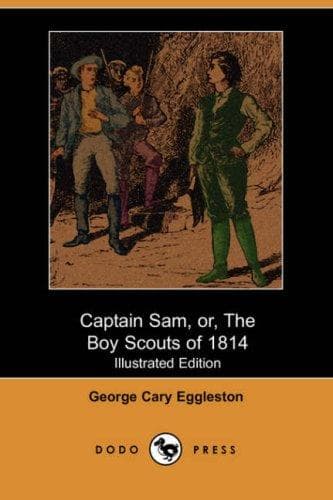
Captain Sam: The Boy Scouts of 1814Eggleston, George Cary
History
Captain Sam: The Boy Scouts of 1814
Eggleston, George Cary
United States -- History -- War of 1812 -- Fiction
No matter where one begins to tell a story there is always something
back of the beginning that must be told for the sake of making the
matter clear. Whatever you tell, something else must have happened
before it and something else before that and something else before
that, so that there is really no end to the beginnings that might be
made. The only way I can think of by which a whole story could be told
would be to begin back at Adam and Eve and work on down to the present
time; and even then the story would not be finished and nobody but a
prophet ever could finish it.
The only way to tell a story then is to plunge into it somewhere as I
did two chapters back, follow it until we get hold of it, and then go
back and explain how it came about before going on with it. I must
tell you just now who these boys were, where they were and how they
came to be there. All this must be told sometime and whenever it is
told somebody or something must wait somewhere, and I really think
Jake Elliott may as well wait there in the drift-pile as not. He
deserves nothing better.
During the summer of the year 1813, while the United States and great
Britain were at war, a general Indian war came on which raged with
especial violence in middle and southern Alabama. The Indians fought
desperately, but General Jackson managed to conquer them thoroughly.
He was empowered by the government to make a treaty with them and he
insisted that they should make a treaty which they could not help
keeping. He made them give up a large part of their land, and so
arranged the boundaries as to make the Indians powerless for further
harm.
The Indians hesitated a long time before they would sign the treaty,
but it was Jackson's way to finish whatever he undertook, and not
leave it to be done over again. As the people of the border used to
say, he "left no gaps in the fences behind him," and so he insisted
upon the treaty and the Indians at last signed it. Meantime, however,
a great many of the Indians, and among them several of their most
savage chiefs had escaped to Florida, which was then Spanish
territory.
Public-domain text, read in full here on John Shaqi.
Reviews
Reviews
No reviews yet
Be the first to share your thoughts on this work.
Join the Discussion
Join the discussion
Sign in to leave a comment or review.
Sign InorCreate an account