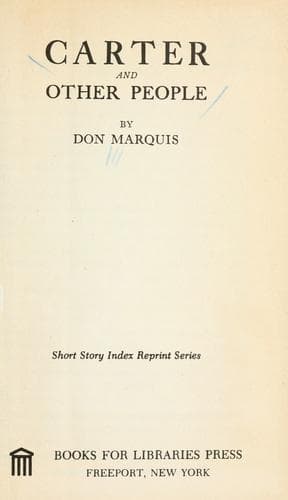
American fiction -- 20th century; Short stories, American
At the farther end of the room was a long red curtain, which covered the
entrance to a sitting-room or parlor, as I guessed; and by the side
of the curtain hung an old-fashioned bell cord, also of red, which
I supposed to communicate with the servants' quarters. It were easy
enough, now that she had taken the whip hand of me so cleverly, to pull
that rope, to set the bell jangling, to rouse the house. Why did she not
do so?
Was she a mad woman? There was that in her inexplicable conduct, and in
her highly-wrought, yet governed, mood, as she sat in brooding silence
across the table from me, to make the theory plausible. Brooding she
was, and studying me, I thought; yet watchful, too. For at any least
motion of mine her hand tightened slightly upon the pistol. We sat
thus while the slow seconds lengthened into intolerable minutes; and I
steamed with sweat, and fidgeted. Nor was I set more at my ease by her
long searching glances. In fact, my overthrow had been so instant and
so complete that my scattered wits had never drawn themselves together
again; I continued as one in a haze; as a person half under the power
of the hypnotist; as a mouse must feel after the first blow of the cat's
paw. And yet one idea began to loom clearly out of that haze and possess
me--the idea that she desired the alarm to be given as little as I did
myself.
But there was no light in that. It was easy to understand why she
did not wish the house aroused while she still believed me to be
Charles--whoever Charles might be. But now?--it was too much for me.
I could not find a justification in reason for my belief; and yet the
conviction grew.
She broke the silence with a question that might have been put with full
knowledge of my thought.
“You are still wondering why I do not give you up?” she said.
I nodded. She leaned towards me across the table, and if ever the demons
of mockery danced through a woman's eyes it was then; and her lips
parted in a kind of silent laughter.
She touched the diamonds about her throat.
“It was these you came after?”
I nodded again. Evidently speech was of no avail with this lady. She
asked questions at her will, and reserved the right of answering none.
“Tell me,” she said, “Why are you a thief? Why do you steal?”
“'Convey, the wise it call,'” I quoted. “Accident, or fate, or destiny,
I suppose,” I went on, wondering more than ever at the question, but
with a fluttering hope. Perhaps the lady (in spite of Charles--such
things have been!) was an amateur sociologist, a crank reformer, or
something of that sort. There had been no mockery in her tone when
she asked the question; instead, I thought, a kind of pity. “Fate,
or destiny,” I went on, “or what you please, 'There is a destiny that
shapes our ends, rough-hew them how we will,'” I quoted again, in my
best actor manner.
Public-domain text, read in full here on John Shaqi.
Reviews
Reviews
No reviews yet
Be the first to share your thoughts on this work.
Elsewhere in the archive
Join the Discussion
Join the discussion
Sign in to leave a comment or review.
Sign InorCreate an account