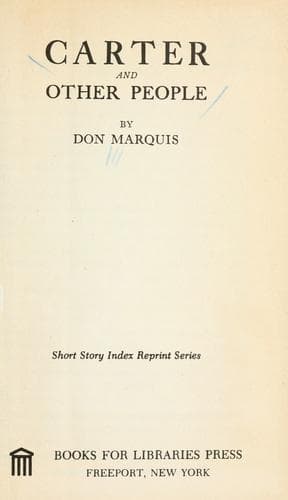
American fiction -- 20th century; Short stories, American
“No,” said the Devil, “I've changed my mind, too. My distaste for
Murtrie has returned to me. I don't want him around. I won't have him in
Hell.”
“See here, now!” cried Death. “You two are starting it all over again.
I won't have it, so I won't! You aren't fair to Murtrie, and you aren't
fair to me! This matter has got to be settled, and settled to-night!”
“Well, then,” said God, “settle it. I've ceased to care one way or
another.”
“I will not,” said Death, “I know my job, and I stick to my job. One of
you two has got to settle it.”
“Toss a coin,” suggested the Devil, indifferently.
Death looked around for one.
“There's a qu-qu-quarter in m-m-my t-t-trousers' p-p-pocket,” stammered
Old Man Murtrie, and then stuck his head under the bedclothes and
shivered as if he had the ague.
Death picked up Murtrie's poor little weazened trousers from the floor
at the foot of the cot, where they lay sprawled untidily, and shook them
till the quarter dropped out.
He picked it up.
“Heads, he goes to Heaven. Tails, he goes to Hell,” said Death, and
tossed the coin to the ceiling. Murtrie heard it hit the ceiling, and
started. He heard it hit the floor, and bounce, and jingle and spin and
roll and come to rest. And he thrust his head deeper under the covers
and lay there quaking. He did not dare look.
“Look at it, Murtrie,” said Death.
“Oh! Oh! Oh!” groaned Murtrie, shaking the cot.
But Death reached over and caught him by the neck and turned his face so
that he could not help seeing. And Old Man Murtrie looked and saw that
the coin had fallen with the side up that sent him to----
But, really, why should I tell you? Go and worry about your own soul,
and let Old Man Murtrie's alone.
III.--Never Say Die
|There seemed nothing left but suicide.
But how? In what manner? By what method? Mr. Gooley lay on his bed and
thought--or tried to think. The pain in his head, which had been there
ever since the day after he had last eaten, prevented easy and coherent
thought.
It had been three days ago that the pain left his stomach and went into
his head. Hunger had become a cerebral thing, he told himself. His body
had felt hunger so long that it refused to feel it any longer; it had
shifted the burden to his brain.
“It has passed the buck to my mind, my stomach has,” murmured Mr. Gooley
feebly. And the mind, less by the process of coherent and connected
thought than by a sudden impulsive pounce, had grasped the idea of
suicide.
“Not with a knife,” considered Mr. Gooley. He had no knife. He had no
money to buy a knife. He had no strength to go down the three flights
of stairs in the cheap Brooklyn lodging house where he lay, and borrow a
knife from the landlady who came and went vaguely in the nether regions,
dim and damp and dismal.
Public-domain text, read in full here on John Shaqi.
Reviews
Reviews
No reviews yet
Be the first to share your thoughts on this work.
Join the Discussion
Join the discussion
Sign in to leave a comment or review.
Sign InorCreate an account