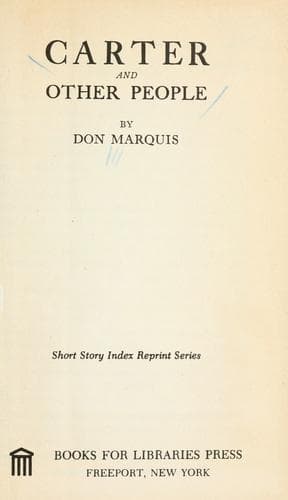
American fiction -- 20th century; Short stories, American
“See here,” he said, speaking rapidly, “my clothes look all right yet,
but I'm broke. I'm hungry. I haven't had anything to eat since day
before yesterday. I'm not kidding you; it's true. You looked like a good
fellow to me, and I took a chance. Hunger” (as he spoke it he seemed to
remember having heard the remark before), “hunger makes one a judge of
faces; I gambled on yours.”
She wasn't complimented; she regarded him with a manner in which scorn
and incredulity were blended; Merriwether Buck perceived that, for some
reason or other, she was insulted.
“Don't,” she said, “don't pull any of that sentimental stuff on me. I
thought you was a gentleman!”
And she turned away from him. He took a step in pursuit and started to
renew his plea; for he was determined to play his game square and give
the directing deities of the city a fair chance to soften whatsoever
random heart they would.
“Beat it!” she shrilled, “beat it, you cheap grafter, or I'll call a
cop!”
And Merriwether beat it; nor' by nor'west he beat it, as the street
beats it; as the tides beat. The clock on the Times building marked 1.20
as he paused by the subway station there. In forty minutes--just the
time it takes to hook your wife's dress or put a girdle round the
world--Merri-wether Buck would be beating it toward eternity, shooing
before him a flock of astonished ghosts of his own making. Twenty
minutes had gone by and whatever gods they be that rule New York had
made no sign; perhaps said gods were out at lunch or gone to Coney
Island. Twice twenty minutes more, and----
But no. It is all over now. It must be. There emerges from the subway
station one who is unmistakably a preacher. The creases of his face
attest a smiling habit; no doubt long years of doing good have given it
that stamp; the puffs of white hair above the temples add distinction to
benignity.
“I beg your pardon,” said Merriwether Buck, “but are you a minister?”
“Eh?” said the reverend gentleman, adjusting a pair of gold-rimmed
eyeglasses. “Yes,” he said pleasantly, “I am,” and he removed the
glasses and put them back on once again, as he spoke. Somehow, the way
he did it was a benediction.
“I am hungry,” said Merriwether.
“Dear me!” said the reverend gentleman. “I shouldn't have thought it.”
“Will you ask me to lunch?”
“Eh?” It was an embarrassing question; but the gentleman was all
good nature. His air indicated that he did not intend to let his
own embarrassment embarrass Merriwether too much. “My dear man, you
know--really----” He placed a shapely hand upon Merriwether's shoulder,
rallyingly, almost affectionately, and completed the sentence with a
laugh.
“It's charity I'm asking for,” said Merriwether.
“Oh!” For some reason he seemed vastly relieved. “Have you been--but,
dear me, are you sure you aren't joking?”
“Yes; sure.”
“And have you--ahem!--have you sought aid from any institution; any
charitable organization, you know?”
Public-domain text, read in full here on John Shaqi.
Reviews
Reviews
No reviews yet
Be the first to share your thoughts on this work.
Elsewhere in the archive
Join the Discussion
Join the discussion
Sign in to leave a comment or review.
Sign InorCreate an account