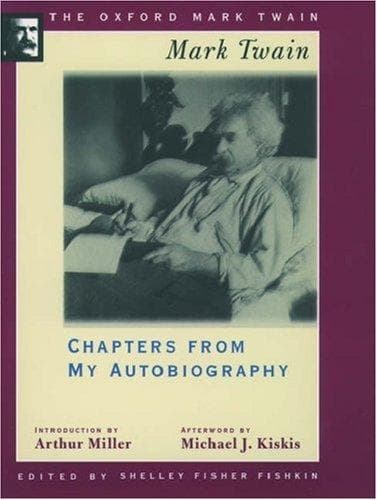
Authors, American -- 19th century -- Biography; Humorists, American -- 19th century -- Biography; Twain, Mark, 1835-1910
That pair of devoted comrades were always shutting themselves up
together when there was opportunity to have what Susy called "a cozy
time." From Susy's nursery days to the end of her life, she and her
mother were close friends; intimate friends, passionate adorers of each
other. Susy's was a beautiful mind, and it made her an interesting
comrade. And with the fine mind she had a heart like her mother's. Susy
never had an interest or an occupation which she was not glad to put
aside for that something which was in all cases more precious to her--a
visit with her mother. Susy died at the right time, the fortunate time
of life; the happy age--twenty-four years. At twenty-four, such a girl
has seen the best of life--life as a happy dream. After that age the
risks begin; responsibility comes, and with it the cares, the sorrows,
and the inevitable tragedy. For her mother's sake I would have brought
her back from the grave if I could, but I would not have done it for my
own.
_From Susy's Biography_.
Then papa went to read in public; there were a great many authors
that read, that Thursday afternoon, beside papa; I would have liked
to have gone and heard papa read, but papa said he was going to
read in Vassar just what he was planning to read in New York, so I
stayed at home with mamma.
The next day mamma planned to take the four o'clock car back to
Hartford. We rose quite early that morning and went to the Vienna
Bakery and took breakfast there. From there we went to a German
bookstore and bought some German books for Clara's birthday.
Dear me, the power of association to snatch mouldy dead memories out of
their graves and make them walk! That remark about buying foreign books
throws a sudden white glare upon the distant past; and I see the long
stretch of a New York street with an unearthly vividness, and John Hay
walking down it, grave and remorseful. I was walking down it too, that
morning, and I overtook Hay and asked him what the trouble was. He
turned a lustreless eye upon me and said:
"My case is beyond cure. In the most innocent way in the world I have
committed a crime which will never be forgiven by the sufferers, for
they will never believe--oh, well, no, I was going to say they would
never believe that I did the thing innocently. The truth is they will
know that I acted innocently, because they are rational people; but what
of that? I never can look them in the face again--nor they me, perhaps."
Hay was a young bachelor, and at that time was on the "Tribune" staff.
He explained his trouble in these words, substantially:
Public-domain text, read in full here on John Shaqi.
Reviews
Reviews
No reviews yet
Be the first to share your thoughts on this work.
Join the Discussion
Join the discussion
Sign in to leave a comment or review.
Sign InorCreate an account