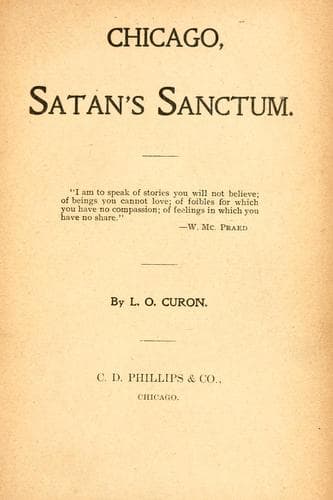
Crime -- Illinois -- Chicago; Police corruption -- Illinois -- Chicago; Political corruption -- Illinois -- Chicago
That part of the city south of Jackson boulevard to Sixteenth street, and
from State street on the east to the river on the west, embraces the tough
part of the second precinct of the second police district. In the year
1897 of the total number of arrests of women and girls in the city, 17,624
in number, 8,957, or over 50 per cent, were, as the police term it, "run
in" from this police district. How often the same women were arrested and
re-arrested it is impossible to say, or whether they were "pinched"
oftener than once in the same night. Of this latter number 7,364 were
discharged by the magistrates, but the larger number contributed one
dollar each to the justice for signing a bail bond for their appearance
for trial. In addition, 300 women, known as "women lodgers," were also
"run in" in this district in 1897. Of these unfortunates 1,746 were fined;
140 held to the criminal court; 193 released on peace bonds; 209 sent to
the house of correction; 10 held as witnesses; 10 were insane; 7
destitute, and 23 were sick and sent to the hospital. Of this total number
of arrests of women and women lodgers, 9,257 in number, in this police
district in 1897, only 2,288, or about 39 per cent were convicted of
offenses by police magistrates, while 61 per cent of them were discharged.
Of the total number of persons arrested throughout the city in 1897,
83,680 in number, 55,020 were discharged by the police courts, 18,017 were
fined, 4,138 held on criminal charges, and 2,947 bound over to keep the
peace. The remainder were sent to various homes, refuges, asylums and
humane societies. Over 50 per cent of those arrested were discharged. The
percentage of those who furnished bail for their appearance, it is
difficult to ascertain. That the practice exists is too well known to be
proven, that a division of these bail bond fees is made between the
magistrate and the police; the police furnishing the victims, the straw
bailor his signature to, and the justice his approval of, the bond. The
latter collects his fee and divides with the officers, while the straw
bailor exacts his compensation in proportion to the ability of the victim
to pay, then hands over a share to the arresting officers.
That such persecution should exist in a civilized community is a disgrace
to its civilization, that public officers should, for one moment, be
permitted to engage in such hideous traffic in the liberties of their
fellows, is a scandal upon the administration of justice, and that
executive officers of the law, sworn to its enforcement, should be
ignorant of the infamy of such arrests, or knowingly permit them to be
made, is malfeasance in office, and subversion of civil rights.
Public-domain text, read in full here on John Shaqi.
Reviews
Reviews
No reviews yet
Be the first to share your thoughts on this work.
Join the Discussion
Join the discussion
Sign in to leave a comment or review.
Sign InorCreate an account