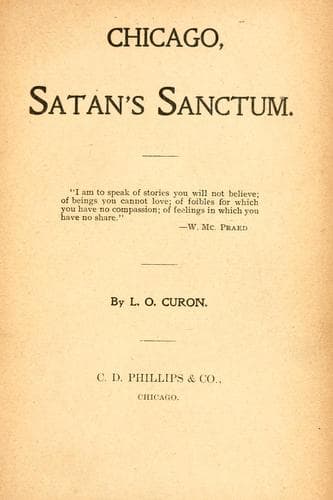
Crime -- Illinois -- Chicago; Police corruption -- Illinois -- Chicago; Political corruption -- Illinois -- Chicago
Some mitigation of the evils of police aggression has been brought about,
as has been observed, by placing police magistrates under a salary
sufficiently large to induce them to partly abolish the practice of
wholesale midnight arrests, with their consequent fees and bailors'
exactions. These fees are now accounted for more rigidly and paid over to
the city, whether they are the result of daylight or midnight arrests.
These evils are not, however, wholly eradicated, nor will they be, until
an aroused public sentiment shall give as much attention, public service,
and personal endeavor, to the attainment of that most desirable end, as is
given to the building of an armory, the establishment of lake front parks,
Greater Chicago, the passage of revenue bills, and the defeat of the
attempt to obtain public franchises without compensation to the granting
municipality.
Whatever will tend to create wealth for the individual, to increase the
volume of trade, or add to the attractiveness of the city in the
improvement or adornment of its public parks, the energetic and pushing
citizen aids with his personal services, and abundant wealth. Its moral
attractions receive, in so far as the repression of villainy and of
disgusting vice is concerned, but little, if any, personal or pecuniary
assistance from the people. At a recent meeting of the Law Enforcement
League, a clergyman, who had freely given his time and services in behalf
of the objects of that association, begged for the paltry sum of $250 with
which to carry on the work. It was received by contribution from his
audience after repeated appeals. Had it been a meeting for stock
subscriptions to some corporation promising large returns, or for the
purpose of building a monument to some former day hero, or author, the
appeal would not have had to fall upon the ears of the people repeatedly.
The request would have been granted upon its first presentation. "This
work," said the preacher, "cannot be carried on by sympathy, or applause,
or resolutions, or expressions of good will. There is nothing but hard
cash that counts in the practical work of enforcing the law."
CHAPTER IV.
Public-domain text, read in full here on John Shaqi.
Reviews
Reviews
No reviews yet
Be the first to share your thoughts on this work.
Join the Discussion
Join the discussion
Sign in to leave a comment or review.
Sign InorCreate an account