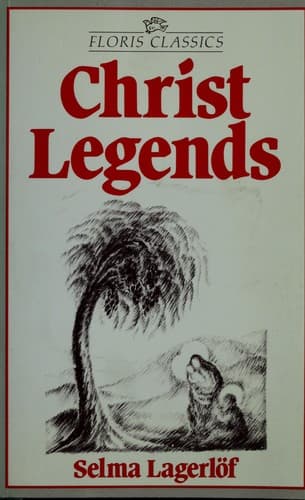
Jesus Christ -- Fiction; Jesus Christ -- Juvenile fiction; Short stories
When the two children had finished their clay cuckoos, they stood the
birds up in a ring in front of them. These looked just as clay cuckoos
have always looked. They had big, round lumps to stand on in place of
feet, short tails, no necks, and almost imperceptible wings.
But, at all events, one saw at once a difference in the work of the
little playmates. Judas’ birds were so crooked that they tumbled over
continually; and no matter how hard he worked with his clumsy little
fingers, he couldn’t get their bodies neat and well formed. Now and then
he glanced slyly at Jesus, to see how he managed to make his birds as
smooth and even as the oak-leaves in the forests on Mount Tabor.
As bird after bird was finished, Jesus became happier and happier. Each
looked more beautiful to him than the last, and he regarded them all
with pride and affection. They were to be his playmates, his little
brothers; they should sleep in his bed, keep him company, and sing to
him when his mother left him. Never before had he thought himself so
rich; never again could he feel alone or forsaken.
The big brawny water-carrier came walking along, and right after him
came the huckster, who sat joggingly on his donkey between the large
empty willow baskets. The water-carrier laid his hand on Jesus’ curly
head and asked him about his birds; and Jesus told him that they had
names and that they could sing. All the little birds were come to him
from foreign lands, and told him things which only he and they knew. And
Jesus spoke in such a way that both the water-carrier and the huckster
forgot about their tasks for a full hour, to listen to him.
But when they wished to go farther, Jesus pointed to Judas. “See what
pretty birds Judas makes!” he said.
Then the huckster good-naturedly stopped his donkey and asked Judas if
his birds also had names and could sing. But Judas knew nothing of this.
He was stubbornly silent and did not raise his eyes from his work, and
the huckster angrily kicked one of his birds and rode on.
In this manner the afternoon passed, and the sun sank so far down that
its beams could come in through the low city gate, which stood at the
end of the street and was decorated with a Roman Eagle. This sunshine,
which came at the close of the day, was perfectly rose-red—as if it had
become mixed with blood—and it colored everything which came in its
path, as it filtered through the narrow street. It painted the potter’s
vessels as well as the log which creaked under the woodman’s saw, and
the white veil that covered Mary’s face.
But the loveliest of all was the sun’s reflection as it shone on the
little water-puddles which had gathered in the big, uneven cracks in the
stones that covered the street. Suddenly Jesus stuck his hand in the
puddle nearest him. He had conceived the idea that he would paint his
gray birds with the sparkling sunbeams which had given such pretty color
to the water, the house-walls, and everything around him.
Public-domain text, read in full here on John Shaqi.
Reviews
Reviews
No reviews yet
Be the first to share your thoughts on this work.
Join the Discussion
Join the discussion
Sign in to leave a comment or review.
Sign InorCreate an account