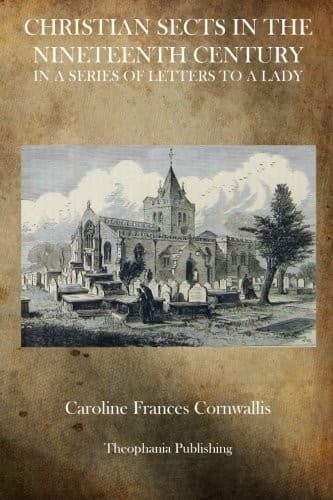
Christian Sects in the Nineteenth Century — John Shaqi
Christian Sects in the Nineteenth CenturyCornwallis, Caroline Frances
Religion
Christian Sects in the Nineteenth Century
Cornwallis, Caroline Frances
Christian sects -- History -- 19th century
they use on the admission of a new member, as well as on other occasions,
when they deem it necessary or proper: they make a weekly collection
before the sacrament of the Lord’s supper; use mutual exhortation;
abstain from blood and things strangled; wash each other’s feet; hold
that every one is to consider all that he possesses to be liable to the
calls of the poor and the church, and that it is unlawful to “lay up
treasure upon earth,” by setting them apart for any future use. They
allow of public and private diversions, so far as they are not connected
with circumstances really sinful; but apprehending a lot to be sacred,
they disapprove of lotteries, playing at cards, dice, &c. They maintain
the necessity of a plurality of elders, pastors, or bishops in each
church, and the necessity of the presence of two elders in every act of
discipline, and at the administration of the Lord’s supper. Second
marriages disqualify for the office of elder. The elders are ordained by
prayer and fasting, imposition of hands, and giving the “right hand of
fellowship.” In their discipline they are strict and severe, and in
every transaction esteem unanimity to be absolutely necessary.
[Picture: Decorative header]
LETTER IX.
CALVINISTIC METHODISTS. EVANGELICAL OR SERIOUS CHRISTIANS.
I noticed the name of George Whitfield when speaking of Wesley and his
followers, for during a time they acted in unison; Whitfield, however,
soon embraced the Calvinistic tenets, and then the friends separated with
much of unkindly feeling. Wesley held the doctrines of Calvin in
abhorrence, as altogether unchristian and unfounded in Scripture. “I
defy you to say so hard a thing of the Devil,” said he with
characteristic earnestness, when speaking of the notion that God could
arbitrarily create any for eternal reprobation. This separation between
the leaders soon extended to their congregations, and from that time
Calvinistic and Wesleyan Methodists became distinct sects, differing,
however, but little on any other point, excepting in the greater tendency
to enthusiasm among the followers of Whitfield.
Public-domain text, read in full here on John Shaqi.
Reviews
Reviews
No reviews yet
Be the first to share your thoughts on this work.
Join the Discussion
Join the discussion
Sign in to leave a comment or review.
Sign InorCreate an account