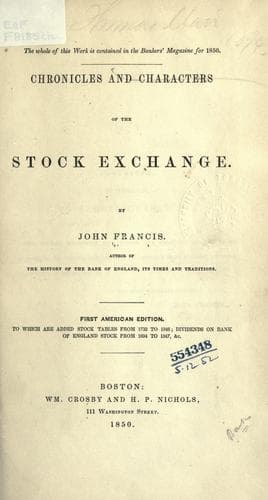
Chronicles and characters of the stock exchangeFrancis, John, of the Bank of England
History
Chronicles and characters of the stock exchange
Francis, John, of the Bank of England
Speculation; Stock Exchange (London, England)
But the market became overloaded, and holders began to realize. Every
packet from abroad bore foreign securities, and the price drooped.
During the fever, Spanish Cortes stock, which in 1833 was 16½, was
forced to 72. Portuguese was done at 102, and every foreign stock
rose in proportion.
By May, 1835, the market became overloaded; all were sellers; the
price drooped; and on the 21st the panic commenced. Spanish stock
fell at once sixteen per cent.; the scrip went to three discount; and
the lower the price, the more anxious were the holders to sell. Every
one grew alarmed; and those who had bought as a permanent investment
parted with all their interest. Private gentlemen, who had been
tempted to buy, hurried with heavy hearts to their brokers; and the
Stock Exchange may be said to have groaned beneath the burden.
To add to the distress, the greatest holder turned bear; and it is
difficult to describe the confusion with which the market closed
on the evening of the 21st of May. Some were rejoicing at their
deliverance, though suffering a large loss, while others were
absolutely ruined. In many panics there had been hope. They were
known to be alarms which time would rectify; but there was no hope
for the holder of foreign stock; it was worthless, and it was known
to be worthless. Every one felt assured that no dividend would ever
be paid upon it; and when this was remembered, men cursed the fatuity
which had led them to buy waste-paper, and execrated the greediness
which had lured them to ruin. Those who the week before possessed
securities which would have realized hundreds of thousands, were
reduced to bankruptcy. Brokers who had kept to their legitimate
business were defaulters; most who had bought for time were unable
to pay their differences; while respectable men, who had laughed
at speculation, and thought themselves too clever to be taken
in by companies, had ventured their all on the faith of foreign
governments. Establishments were reduced, families were ruined,
delicately-nurtured women were compelled to earn their bread. Death
ensued to some from the shock, misery was the lot of others, and
frantic confusion once more marked the alleys and the neighbourhood
of Capel Court. Consternation reigned paramount, and almost every
third man was a defaulter. All foreign securities were without a
price; the bankers refused to advance money; the brokers’ checks
were first doubted, and then rejected; nothing but bank-notes would
be taken; and, with a desperation which will never be forgotten,
the jobbers closed their books, refused to transact any business,
and waited the result in almost abject despair. The stocks bore no
price, the brokers ceased to issue their lists, and the blackboard
was found inadequate to contain the names. Differences to the amount
of ten millions were declared; and the entire wall would have been
insufficient to contain the names. The practice was, therefore,
Public-domain text, read in full here on John Shaqi.
Reviews
Reviews
No reviews yet
Be the first to share your thoughts on this work.
Elsewhere in the archive
Join the Discussion
Join the discussion
Sign in to leave a comment or review.
Sign InorCreate an account