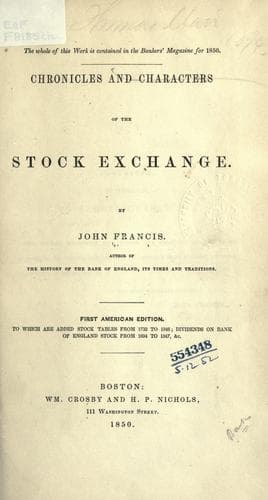
Chronicles and characters of the stock exchangeFrancis, John, of the Bank of England
History
Chronicles and characters of the stock exchange
Francis, John, of the Bank of England
Speculation; Stock Exchange (London, England)
That a feeling of gambling was encouraged is indisputable, and the
attempt of Sir John Barnard was, therefore, honorable. But this
propensity seems a natural principle of humanity. The savage in a
state of nature, and the peer at the highest point of civilization,
alike indulge in it. Every man who trades beyond his power to
pay, every merchant who purchases goods on delivery, is, strictly
speaking, a gambler; and it is well known to be a common practice of
the first merchants to buy goods for arrival without the slightest
intention of receiving them, and directly a profit can be gained, or
too great a loss averted, they are resold without even the bill of
lading being visible to the buyer.
It is these things which lead to disgraceful bankruptcies. The
intelligent author of “Partnership en Commandite” says:—“On the
banks of the Danube, the Vistula, the Rhine, and the Tagus,—on
the shores of the Baltic and the Mediterranean,—on the plains of
Poland,—I have met with men who have asked me for charity, because
they had been ruined by connection with some of the first English
houses.”
The first effect of Sir John Barnard’s Act was serious; and bargains
for time, or the “race-horses of ’Change Alley,” as they were termed,
were said to have expired. It was soon found, however, that to make
the brokers responsible would answer every purpose; and business
flourished as gayly as if the father of the city had never had an
existence.
Though this measure was with difficulty passed, the wonder is that it
passed at all, as the reasoning brought in its favor was very slight;
and the following is a fair specimen of the speeches in its behalf:—
“The broker comes to the merchant, talks of the many fatigues and
dangers, the great trouble and small profits in the way of trade.
He then tells him if he will allow him to dig in the rich mine of
’Change Alley, he could get more in a day than he could by his trade
in twelve months. The merchant is persuaded, he engages, goes in for
some time, and is quite undone. His just creditors are surprised.
‘What,’ say they, ‘this man had a good stock to begin with, and he
has had a good trade for several years; he never lived extravagantly;
what is become of his effects and his money?’ They inquire, and find
that the whole was gamed away in ’Change Alley.”
The fears of the brokers outran their discretion as soon as the bill
passed into law; and the maledictions poured upon Sir John were
loud, deep, and frequent. They thought that the principal and most
profitable part of their trade was departed; and it was declared—how
truly, time has since shown—that it would be only possible to get
an estate by the slow, dull way of commerce. Every effort was made
to ruin his reputation and his character; but both were too firmly
established to receive any injury from the malevolent stories which
were currently circulated.
Public-domain text, read in full here on John Shaqi.
Reviews
Reviews
No reviews yet
Be the first to share your thoughts on this work.
Join the Discussion
Join the discussion
Sign in to leave a comment or review.
Sign InorCreate an account