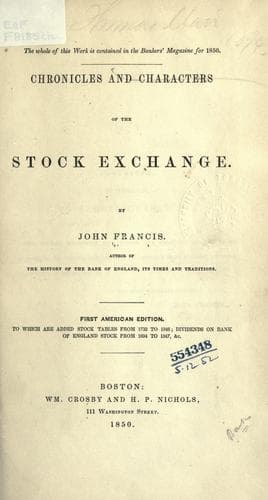
Chronicles and characters of the stock exchangeFrancis, John, of the Bank of England
History
Chronicles and characters of the stock exchange
Francis, John, of the Bank of England
Speculation; Stock Exchange (London, England)
In 1810, the houses of Baring and Goldsmid were contractors for the
ministerial loan of fourteen millions. But Sir Francis Baring dying,
the support of the market was left to his companion. The task was
difficult, for a formidable opposition had arisen, which required the
united energies of both houses to repress. It was the interest of
this opposition to reduce the value of scrip, and it succeeded. Day
by day it lowered; and day by day was Mr. Goldsmid’s fortune lowered
with it. He had about eight millions in his possession; and with the
depression of his fortune, his mind grew dispirited and disordered.
Another circumstance occurred at this particular moment to increase
his embarrassment. Half a million of exchequer-bills had been placed
in his hands to negotiate for the East India Company; and the latter,
fearing the result of the contest on the Stock Exchange, claimed the
amount. His friends did not rally round him, as at such a moment, and
with such a man, his friends should have done; and Abraham Goldsmid,
dreading a disgrace, which his sensitive and honorable nature
magnified a hundredfold, after entertaining a large dinner-party,
destroyed himself in the garden of his magnificent residence, in
Surrey.
This sad event created a sensation in the city, unparalleled by the
loss of any single individual. The death of the great loan-contractor
was regarded as of national importance. Expresses were sent with the
news to the king and the Prince of Wales. The funds fell three per
cent. The journals united in eulogizing the man whose death they
recorded. The jobbers of Capel Court crowded in anxious inquiry. The
merchants of the Exchange assembled before the accustomed time. The
thoroughfares resounded with rapid questions and hurried replies.
Little or no business was done; and, it is said, the great question
of peace or war never created a similar confusion. The jury recorded
their opinion, and, when the remains were carried to their home, the
procession was followed by a crowd, who, partaking of his charity
in life, thronged to honor him in death. Sobs and suppressed moans
attested the reality of their sorrow, and bore a fitting testimony to
his worth. The high-priests and elders paid every distinction which
the Mosaic ordinances allowed; but, in conformity with the commands
of the great lawgiver, they withheld from him the customary rites;
and unconsecrated ground received the remains of Abraham Goldsmid,
the Hebrew suicide.
Public-domain text, read in full here on John Shaqi.
Reviews
Reviews
No reviews yet
Be the first to share your thoughts on this work.
Elsewhere in the archive
Join the Discussion
Join the discussion
Sign in to leave a comment or review.
Sign InorCreate an account