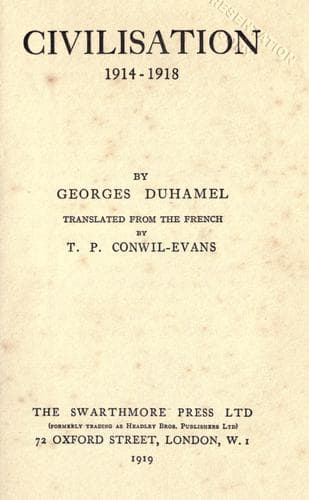
Short stories, French -- Translations into English; World War, 1914-1918 -- Fiction
What an impressive personage! He was tall and, it seemed to me, of
enormous proportions. A typically military face--no one could mistake
it--deep features over which the fingers and the nails of the sculptor
must have passed again and again; on the nose, too, the sculptor’s
thumb must have been at work, pressing and moulding delicately the
lumps of flesh; a bristling white moustache and imperial, of the
kind specially reserved for soldiers advanced in age. He wore an old
general’s uniform, which many give up with the greatest difficulty,
like old ideas. Gold, jewellery, velvet, and silk facings adorned his
body with such refulgence that the imagination could hardly conceive
that, beneath this barbarous splendour, there were lungs, muscles,
bones and a shrivelled skin covered with grey hair.
A look escaped from beneath his bushy eyebrows, which was at once
violent, questioning, and suggestive of unutterable pride.
He came forward in grave silence.
I expected a scene; but from that moment what took place has remained
mysteriously veiled in my memory.
In one single movement everybody there took up a certain position, and
they made a correct military salute according to the rules taught so
patiently in barracks to recruits from the country.
Faces imperceptibly became rigid. The light in one’s eyes became dull
and fixed. Ten centuries of a habit imposed and accepted petrified
tongues, muscles and minds.
Some thistleseed flew away with the breeze. As I saw it fluttering,
white, woolly, without weight, I thought--I don’t know why--of that
subtle, fine, delicate, critical spirit. It vanished in a gust of wind.
A big insect loaded with pollen could be heard buzzing around.
I felt stupid! A long pause; then the white-moustached gentleman
decided to let these words fall from his lips:
“Good-day, gentlemen!”
The visit began in the rooms which had been packed with the wounded
from the Marne front. There young men were lying who had been face to
face with War, and who had calmly recognised it as the old Devil of
the Species. From that time they spoke of it just as they always will,
now that three years of blood, suffering and torture have decimated,
maimed and broken them.
But nobody bothered about their thoughts. Sheets were drawn back,
bandages were undone, wounds were left open to the air. It was now a
question of “cases” and of lesions.
A scientific discussion was commencing, to which I listened with an
eager curiosity. As I have said, doctors were present who were princes
in their profession. They came on the scene with minds, I thought,
which were profoundly independent--even aggressive. And I looked
forward to an interesting controversy.
M. Dufrêne was closely examining some one’s thigh, in which a dark,
quivering hole had been made by a shell.
“What do you put in it, Proby?” he said.
Professor Proby began a detailed explanation of the way in which such
wounds ought to be treated.
Public-domain text, read in full here on John Shaqi.
Reviews
Reviews
No reviews yet
Be the first to share your thoughts on this work.
Elsewhere in the archive
Join the Discussion
Join the discussion
Sign in to leave a comment or review.
Sign InorCreate an account