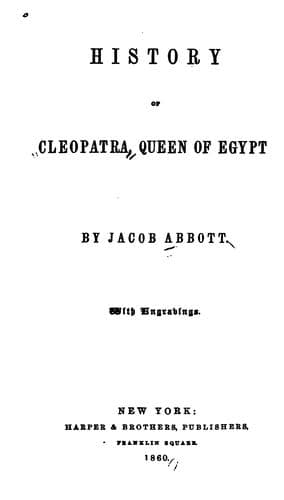
Cleopatra, Queen of Egypt, -30 B.C.; Egypt -- History -- 332-30 B.C. -- Biography; Queens -- Egypt -- Biography
The port of Alexandria presented thus a constant picture of life and
animation. Merchant ships were continually coming and going, or lying at
anchor in the roadstead. Seamen were hoisting sails, or raising anchors,
or rowing their capacious galleys through the water, singing, as they
pulled, to the motion of the oars. Within the city there was the same
ceaseless activity. Here groups of men were unloading the canal boats
which had arrived from the river. There porters were transporting bales
of merchandise or sacks of grain from a warehouse to a pier, or from one
landing to another. The occasional parading of the king's guards, or the
arrival and departure of ships of war to land or to take away bodies of
armed men, were occurrences that sometimes intervened to interrupt, or
as perhaps the people then would have said, to adorn this scene of
useful industry; and now and then, for a brief period, these peaceful
vocations would be wholly suspended and set aside by a revolt or by a
civil war, waged by rival brothers against each other, or instigated by
the conflicting claims of a mother and son. These interruptions,
however, were comparatively few, and, in ordinary cases, not of long
continuance. It was for the interest of all branches of the royal line
to do as little injury as possible to the commercial and agricultural
operations of the realm. In fact, it was on the prosperity of those
operations that the revenues depended. The rulers were well aware of
this, and so, however implacably two rival princes may have hated one
another, and however desperately each party may have struggled to
destroy all active combatants whom they should find in arms against
them, they were both under every possible inducement to spare the
private property and the lives of the peaceful population. This
population, in fact, engaged thus in profitable industry, constituted,
with the avails of their labors, the very estate for which the
combatants were contending.
Seeing the subject in this light, the Egyptian sovereigns, especially
Alexander and the earlier Ptolemies, made every effort in their power to
promote the commercial greatness of Alexandria. They built palaces, it
is true, but they also built warehouses.
One of the most expensive and celebrated of all the edifices that they
reared was the light-house which has been already alluded to. This
light-house was a lofty tower, built of white marble. It was situated
upon the island of Pharos, opposite to the city, and at some distance
from it. There was a sort of isthmus of shoals and sand-bars connecting
the island with the shore. Over these shallows a pier or causeway was
built, which finally became a broad and inhabited neck. The principal
part of the ancient city, however, was on the main land.
Public-domain text, read in full here on John Shaqi.
Reviews
Reviews
No reviews yet
Be the first to share your thoughts on this work.
Join the Discussion
Join the discussion
Sign in to leave a comment or review.
Sign InorCreate an account